BLOG

Read the Latest Real Estate News, Market Updates, and Helpful Tips

RSS

Salmon Sessions Is Back

(Image courtesy of Penmar Community Arts Society)


Every once in a while, an event comes along that perfectly captures what makes a community special. For South Surrey, that event is the Salmon Sessions Music Festival.

I'm excited to share that Salmon Sessions is returning for its 4th year — and if you haven't been before, this is the year to go.

What Is Salmon Sessions?

Salmon Sessions is a one-day outdoor music festival held right on the banks of the Little Campbell River, at the Semiahmoo Fish and Game Club (1284 184 St., South Surrey). This year's event takes place on Saturday, August 22, 2026, from 3–9 PM.

It's the kind of event that reminds you why you chose to live here. Live music from local and regional artists, fresh food from local vendors, an artisan market, family-friendly activities, and hatchery tours — all set against one of the most beautiful natural backdrops South Surrey has to offer.

A Cause Worth Supporting

The festival raises funds for the Little Campbell River Hatchery — one of B.C.'s oldest entirely volunteer-run salmon hatcheries. Every year, this remarkable operation releases more than 100,000 salmonids into the Little Campbell River. Over the past 40 years, that adds up to more than four million salmon returned to the wild.

After the hatchery suffered significant flood damage in 2021, the community has rallied to help rebuild. This year, funds raised at Salmon Sessions will go directly toward infrastructure upgrades and site improvements to make the hatchery more resilient for the future.

As hatchery president Diana Barkley put it: "People don't always realize how fragile this hatchery is. One bad flood, one broken pump — and thousands of fish might be lost. Salmon Sessions is our way of asking the community to help us keep going, and they've shown up, year after year."

What to Expect on August 22

Here's what's on the agenda:

  • Live music from a lineup to be announced May 1 (past years have featured a great mix of locally and regionally known acts)

  • Local food trucks and fresh eats

  • Artisan vendor market (vendor applications are currently open!)

  • Hatchery tours — genuinely cool, especially if you've got kids

  • Community organization and sponsor booths

  • And just good old-fashioned time outside with your neighbours

The festival runs 3–9 PM, so it's a perfect late-afternoon-into-evening outing. Bring the family, grab some food, and stay for the music as the sun goes down over the river.

Want to Get Involved?

If you're a local business owner, this is a great opportunity. Salmon Sessions is actively looking for sponsors and vendors — from financial contributions to in-kind support like products, services, and volunteer teams. Sponsorship packages include brand visibility, on-site engagement, and digital promotion.

For everything you need to know about getting involved — whether as a visitor, vendor, or sponsor — head over to penmar.ca.

This Is South Surrey

I talk to a lot of people who are weighing their options when it comes to South Surrey real estate — what neighbourhood to buy in, what kind of community they want to raise their family in. And honestly, events like Salmon Sessions are a big part of the answer.

This is a neighbourhood where people show up. Where volunteers quietly release millions of salmon into a river year after year, and then throw a party to keep it going. Where families can spend a Saturday afternoon listening to live music, touring a hatchery, and buying handmade goods from local artisans.

That's the lifestyle South Surrey offers — and it's one of the things that makes this such a special place to call home.

Thinking about calling South Surrey home? I'd love to help you find your place in a community like this. Reach out anytime — I'm always happy to chat.

Read

Farms for Sale on Vancouver Island and the BC Interior

Farms for Sale in BC Canada — Beyond the Fraser Valley

When most people think about farm real estate in BC, the Fraser Valley comes to mind first — and for good reason. But BC is a large province, and there are farms for sale across Vancouver Island, the Okanagan, and the Interior that attract buyers looking for something outside the Metro Vancouver orbit.

Here's an overview of what the broader BC farm market looks like and what buyers should know about each region.

Vancouver Island Farm Real Estate

Farms for sale on Vancouver Island range from small hobby farms near Victoria and the Cowichan Valley to larger agricultural parcels in the Comox Valley and north island regions.

The Cowichan Valley is the most established farming region on the island, known for vineyards, market gardens, and small livestock operations. Properties here are in high demand and prices have climbed significantly in recent years. The Comox Valley offers a slightly more affordable alternative with good soil and a strong agricultural community.

Like the mainland, most farmland on Vancouver Island falls within the ALR and is subject to BC Agricultural Land Commission oversight.

The BC Interior — Kelowna and the Okanagan

Farm real estate in Kelowna and the broader Okanagan is dominated by vineyards, orchards, and hobby farms. The region's climate supports tree fruits, wine grapes, and market gardening in a way that few other parts of BC can match.

A farm for sale in Kelowna, BC typically comes at a premium — especially if it includes a winery license or established orchard. Buyers looking for larger parcels at lower prices per acre often look further north into the Thompson-Nicola region or east toward the Kootenays.

The BC Ministry of Agriculture provides region-specific resources for buyers interested in agricultural properties across the province.

What the BC Farm Market Looks Like Overall

BC farm real estate remains strong across most regions. Demand from lifestyle buyers, retiring farmers looking to sell, and investors interested in agricultural land has kept prices elevated. The BC Real Estate Association publishes market data that can give buyers a broader picture of rural property trends across the province.

Focused on the Fraser Valley?

While this post covers the broader BC market, the Fraser Valley remains the most active and accessible farm market in the province for most buyers. Jared Gibbons is one of BC's top farm real estate specialists, with deep expertise in agricultural properties across South Surrey, Langley, Abbotsford, Chilliwack, and the surrounding region. Browse current farms listed on Jared's site or explore Langley farm listings directly.

Ready to find a farm in BC? Contact Jared to discuss your goals — including off-market opportunities in the Fraser Valley.

Read

Ranches and Acreage for Sale in BC — A Buyer's Overview

Ranches and Acreage for Sale in BC — What Buyers Need to Know

BC's rural real estate market covers a wide range of property types — from smaller hobby farms to large working ranches and raw land parcels. If you're searching for farm ground for sale in BC, understanding the differences between these property types will help you make a smarter purchase.

Farms vs. Ranches vs. Raw Acreage

Farms are properties used for crop production, horticulture, or mixed agricultural use. They typically have established infrastructure — irrigation, storage buildings, fencing — and are assessed as farm class by BC Assessment.

Ranches are larger rural properties focused on livestock — cattle, horses, or other grazing animals. BC ranches for sale are often found in the Interior, but the Fraser Valley also has significant equestrian and livestock properties, particularly in Langley and Abbotsford.

Raw acreage refers to undeveloped rural land without established agricultural use. These parcels may or may not be inside the ALR, and their development potential depends heavily on zoning and servicing.

Best BC Regions for Larger Rural Parcels

The Fraser Valley — including Langley, Abbotsford, Chilliwack, and Mission — is the most active market for farms and acreage in BC. Langley acreage for sale is particularly sought after, given its proximity to Metro Vancouver and its strong equestrian community.

The BC Interior — including the Okanagan and Thompson-Nicola regions — offers larger parcels at lower prices per acre, making it popular for cattle ranching and larger agricultural operations.

Water Rights: A Critical Due Diligence Item

Water is one of the most important factors when buying rural land in BC. Surface water and groundwater use are both regulated under the province's water licensing system. If the property relies on a water license for irrigation or livestock, you need to confirm that license is valid, transferable, and sufficient for your intended use.

The BC Water Resources office manages water licensing in the province. Review this carefully before purchasing any property where water access is essential to its use.

Road Access and Title

Not all rural properties have legal road access. Before purchasing any acreage, confirm that the property has a registered legal access to a public road — and check the title for any easements, rights-of-way, or covenants that could affect how you use the land.

The BC Land Title and Survey Authority maintains the provincial land title registry and is the authoritative source for title searches and survey information.

Financing Larger Rural Parcels

Standard residential lenders often won't finance large rural parcels or working farms. Farm Credit Canada is a dedicated agricultural lender with products designed for farm ground purchases across the country. The BC Agricultural Land Commission can also provide guidance on what's permissible on ALR land before you finalize financing.

Work With a Fraser Valley Rural Property Specialist

Buying larger rural parcels involves more due diligence than a typical residential transaction. Jared Gibbons is the go-to agent for farms, ranches, and acreage across the Fraser Valley. Browse current Fraser Valley acreages for sale on his site or reach out directly.

Looking at ranch or acreage properties in BC? Contact Jared to discuss what's available and what to watch for.

Read

Hobby Farms for Sale in BC — Is It Right for You?

Is a Hobby Farm in BC Right for You?

More buyers than ever are looking at farm houses for sale in BC — not to run a full commercial operation, but to enjoy a slower pace of life with some land, animals, and space to grow their own food. If that sounds appealing, a hobby farm might be exactly what you're looking for.

What Is a Hobby Farm?

A hobby farm is a small agricultural property — typically under 10 acres — used for personal enjoyment rather than commercial farming. Common uses include raising chickens or small livestock, growing a large vegetable garden, keeping horses, or simply having more space and privacy than a standard residential lot offers.

In BC, hobby farms often sit within the Agricultural Land Reserve. That means they benefit from farm-class property tax rates through BC Assessment, but they're also subject to ALR rules around what you can build and how you can use the land.

What Do Hobby Farms Cost in BC?

Small farms for sale in the Fraser Valley vary widely in price depending on size, location, improvements, and soil quality. In areas like Langley, Abbotsford, and Chilliwack, you can expect to pay anywhere from $1.5 million to $4 million or more for a property with a house, outbuildings, and usable acreage.

Cheaper hobby farms for sale in BC do exist — particularly in less urban parts of the province — but in the Fraser Valley, proximity to Metro Vancouver keeps prices elevated.

Best Fraser Valley Areas for Hobby Farms

The Fraser Valley offers some of the best hobby farm territory in the province. Langley and Abbotsford are popular with buyers who want to stay connected to urban amenities while enjoying rural living. Areas like Chilliwack and Mission offer more land for the dollar, with a quieter, more agricultural feel.

The BC Ministry of Agriculture provides useful information on small farm programs and resources available to hobby farm owners across the province.

The BC Agricultural Land Commission is the place to check if you want to understand what's permitted on any specific property inside the ALR before you make an offer.

Lifestyle Considerations

Owning a hobby farm is rewarding — but it comes with real responsibilities. Fencing, drainage, outbuildings, and equipment all require ongoing maintenance. If you're planning to keep animals, you'll need proper facilities and a plan for feed, vet care, and day-to-day management.

It's also worth thinking about commute times and access to services, especially if you're moving from a more urban area. Many hobby farm buyers find that a 20–40 minute drive from the city is the sweet spot.

Work With an Agent Who Knows Fraser Valley Acreage

Jared Gibbons has extensive experience helping buyers find hobby farms and acreage properties across South Surrey and the Fraser Valley. He understands the ALR rules, knows which properties have development potential, and can help you avoid costly surprises.

Thinking about buying a hobby farm in the Fraser Valley? Contact Jared to talk through your options.

Read

Understanding A1 Zoning in BC — What Buyers Need to Know

What Is A1 Zoning in BC?

If you're looking at rural or agricultural properties in BC, you'll quickly come across the term A1 zoning. It's one of the most common zoning designations for agricultural land in the province — but it can mean slightly different things depending on which municipality you're buying in.

Here's what buyers need to know before purchasing a property zoned A1.

A1 Zoning vs. the Agricultural Land Reserve

It's important to understand that A1 zoning and the Agricultural Land Reserve (ALR) are not the same thing, even though they often overlap.

The ALR is a provincial designation that protects agricultural land across BC. A1 is a municipal zoning classification that determines what uses and structures are permitted on a specific parcel. A property can be both inside the ALR and zoned A1 — and both sets of rules apply at the same time.

When buying agricultural land in BC, you need to check both the ALR status and the local zoning bylaw.

What Can You Do on A1-Zoned Land?

Generally, A1 zoning permits farming and agriculture as the primary use. Most municipalities also allow a single-family dwelling for the farm operator, farm buildings like barns and storage structures, and in some cases, secondary suites or additional farm help accommodation.

What's typically restricted under A1 zoning includes subdividing the land into smaller parcels, building multiple unrelated residential dwellings, and operating commercial businesses unrelated to agriculture.

How A1 Zoning Differs by Municipality

Surrey — The City of Surrey uses A-1 zoning for agricultural areas, primarily in the south part of the city. Review the City of Surrey zoning bylaws for current details.

Abbotsford — Abbotsford's A1 zone has specific provisions for farm home plate areas — defined building envelopes that limit where structures can be placed on the lot. The City of Abbotsford zoning and land use page is the best place to start.

Maple Ridge — Maple Ridge applies A-1 zoning across much of its agricultural area, with rules around parcel size, permitted uses, and setbacks. Check the District of Maple Ridge Zoning Bylaw directly for the most current regulations.

Farm Class Property Tax

One benefit of A1-zoned land that qualifies as a farm is access to farm-class property tax rates. BC Assessment determines whether a property qualifies based on farm income thresholds. Properties that meet the criteria are assessed at a much lower rate, which can significantly reduce annual property taxes.

Questions About Zoning on a Specific Property?

Zoning rules can be complex, and they vary more than most buyers expect between municipalities. Jared Gibbons works with buyers across the Fraser Valley and can walk you through how zoning affects a specific property before you make an offer. You can also find zoning and land use information through Jared's Zonings resource page.

Have questions about A1 zoning on a property you're considering? Contact Jared for straightforward answers before you buy.

Read

Buying Farmland in BC — What You Need to Know


Purchasing farm land in British Columbia is one of the most significant real estate decisions a buyer can make. Whether you're looking for agricultural land for active farming, a future investment, or a rural lifestyle change, BC offers some of the most productive farmland in Canada — but also some of the most regulated.

This guide covers the key things every buyer should understand before making an offer on farm land for sale in British Columbia.

What Is the Agricultural Land Reserve (ALR)?

The first thing to understand when buying farmland in BC is the Agricultural Land Commission (ALC) and the Agricultural Land Reserve it oversees. The ALR is a provincial zone that covers roughly 4.7 million hectares of BC's most productive farmland. Land inside the ALR is intended to be kept in agricultural use.

What does that mean for buyers? A few key things:

  • Non-farm uses, including subdivision and most residential development, are restricted.

  • You'll need ALC approval to use the land for anything other than agriculture or an approved residential use.

  • Removal of land from the ALR is possible but rare — don't buy ALR land banking on exclusion.

Before you buy, confirm whether the property is inside the ALR and what that means for your intended use. The ALC website has a mapping tool to check any address.

Farm Class and Property Taxes

Properties that qualify for farm classification in BC are assessed differently and often taxed at significantly lower rates. The BC Ministry of Agriculture sets the rules around what qualifies, but in general, land must be actively used for farming to receive farm class status.

If a property currently has farm class and you plan to change how it's used, that classification — and the tax benefit — could be lost. Confirm farm class status during due diligence.

Financing Farmland: What's Different

Financing agricultural land in BC is not the same as buying a home. Most major banks will lend on farmland, but the rules around loan-to-value ratios and qualifying income can be stricter. Farm Credit Canada is a federal Crown corporation that specializes in lending to farmers and is often the most flexible option for agricultural land purchases.

CMHC also offers mortgage information relevant to rural properties, though their programs are more focused on rural residential than pure farmland. If the purchase includes a home on the acreage, your financing options broaden somewhat.

What Lenders Look At

  • The income-producing potential of the land

  • Current and historical farm income (if the land is already farmed)

  • Soil quality and crop suitability

  • Any lease agreements currently in place

Due Diligence on Farmland: Don't Skip These Steps

Buying agricultural land requires a more thorough due diligence process than a typical home purchase. Here's what to investigate:

Soil Quality

Not all farmland is equal. BC's soils are classified by capability class, with Class 1 being the best. Ask for a soil survey or commission one if needed. What grows well on the property, what inputs are required, and whether the soil has been depleted through overuse are all critical questions for active farmers.

Water Access

Does the property have water rights? In BC, water for farming comes from wells, creeks, or irrigation districts — and water licences are registered separately from land title. A property may not have sufficient or secure water even if it looks fertile on the surface.

Title and Zoning

Review title for any easements, rights of way, or covenants that could restrict how you use the land. Confirm the zoning designation with the local municipality or regional district — most BC farmland falls under A1 Agricultural zoning, which we cover in detail in our post on A1 zoning in BC.

Existing Leases

Some farmland is leased to active farmers. If there's a lease in place, you may be bound by its terms after purchase. Get a copy and have it reviewed by a real estate lawyer before proceeding.

Best Regions for Farmland in BC

The Fraser Valley — stretching from Langley east to Chilliwack — remains the most sought-after farmland corridor in BC. The combination of Class 1 and 2 soils, mild climate, and proximity to Metro Vancouver markets makes it uniquely productive. Buyers looking at larger acreage and ranch-style properties will find more options in the BC Interior. For a closer look at those options, see our overview of ranches and acreage for sale in BC.

Thinking about purchasing farm land in British Columbia? Jared Gibbons is a Fraser Valley farm real estate specialist who can help you navigate ALR rules, due diligence, and finding the right property for your goals.

Start with a free property evaluation — or reach out directly to discuss what you're looking for.

Read

This Willoughby Heights Townhouse Just Got a Price Drop — 4 Beds, Double Garage, Move-In Ready

Unit 53 at Mayfair — 19897 75A Avenue in Willoughby Heights, Langley — is back on the market with a repositioned price that puts it squarely in front of serious buyers. This is a 4-bedroom, 3-bathroom townhouse spanning 1,462 square feet, built by Zenterra in 2022 and loaded with the kind of finishes that buyers in the Langley townhouse market are actively seeking. For anyone who passed on this one before, the updated price is worth a second look.

What the Mayfair Complex Brings to the Table

Mayfair is a Zenterra-built community in Willoughby Heights comprising 61 townhomes across three storeys. The development was designed with families in mind — each unit includes a side-by-side double garage, private fenced yard or patio, forced air heating, air conditioning, and on-demand hot water. The KitchenAid stainless steel appliance package and Whirlpool washer and dryer are included, along with a gas BBQ hookup on the balcony. There are also two shared outdoor amenity areas, including a children's play space and seating areas for residents.

Why Willoughby Heights Keeps Attracting Buyers

The Willoughby Heights real estate market has been one of the most consistently active pockets in Langley for the better part of a decade, and the fundamentals behind that demand haven't changed. Families moving out of Surrey or South Vancouver looking for more space, a newer build, and access to good schools keep gravitating to this neighbourhood. Mayfair sits close to Peter Ewart Middle School and RE Mountain Secondary, and the Langley Events Centre is nearby for recreation. Willowbrook Shopping Centre, a movie theatre, and transit connections are all within reach, and the future SkyTrain station coming to Langley City Centre continues to put the broader area on the radar of long-term buyers and investors alike.

Modern kitchen with KitchenAid appliances inside a Mayfair townhouse, Langley

What the Langley Townhouse Buyer Is Looking For in 2026

Buyers in the Langley housing market right now are doing the math carefully. With borrowing costs still top of mind, they're looking for properties that deliver square footage, functionality, and a neighbourhood with staying power — not just a competitive sticker price. A 4-bedroom townhouse with a double garage, AC, and a fenced yard in a well-maintained strata checks every box for a growing family. It also appeals to buyers who want the feel of a detached home without the premium price tag that comes with it in this market.

Why a Price Adjustment Creates Real Opportunity

A relisting at a new price isn't a red flag — in the current Fraser Valley real estate climate, it's often a recalibration to where the market actually sits. Comparable townhomes in Willoughby Heights have been selling in the $900K–$950K range, and a sharpened price on a move-in-ready, newer build like this one draws buyers who've been waiting for the right moment. For anyone tracking homes in Langley with four bedrooms and modern construction, this is one of the more practical options currently available.

Double garage interior with EV charging at Mayfair townhomes, Langley BC

Who This Property Is Ideal For

This unit works well for families relocating from Metro Vancouver who need more bedroom count and a proper garage. It also suits buyers who want a newer Langley townhouse without taking on a renovation project or a dated strata. The layout, the finishes, and the community design are all oriented toward everyday livability — the kind of home you move into and don't need to touch.

Local Knowledge That Goes Beyond the Listing

Jared Gibbons has been active in the Willoughby Heights and Langley real estate market long enough to understand how inventory cycles, pricing adjustments, and buyer demand interact in real time. When a property like this gets repositioned, knowing whether it's an opportunity or a signal requires reading the broader market context — not just the number on the sign. If you're considering this property or want to understand where it sits relative to current comparables, that's exactly the kind of conversation worth having.

Read

Over 100,000 BC Condo Owners Could Face an $8,000+ Bill in 2026 — Are You Protected?

If you're buying or already own a condo in South Surrey, White Rock, or anywhere across the Fraser Valley, there's a financial risk quietly building inside strata buildings across British Columbia — and most buyers don't see it coming until it's too late.

Why BC Strata Reserve Funds Are Underfunded

A new report from OctoAI (March 2026) reveals a troubling picture of strata corporation finances across the province. The average BC strata holds just $4,000 per unit in reserve funds — compared to $10,000 per unit in Ontario. Ontario condo owners contribute nearly three times more to their reserve funds than BC owners do.

The result? More than 75% of BC stratas are poorly funded, defined as having less than 80% of what's needed to cover future repairs. Even more concerning, over 50% are in critical territory — funded at less than 50% capacity. These aren't edge cases. This is the norm across the province.

What Is a Special Assessment — and Why Should You Care?

When a strata corporation doesn't have enough money in its contingency reserve fund to cover a major repair — a roof replacement, elevator overhaul, or parking structure repair — it has two options: borrow money or issue a special levy to owners.

A special levy means every unit owner receives a bill. Sometimes it's a few hundred dollars. But based on current projections from the OctoAI report, over 100,000 BC condo owners could face special assessments averaging $8,000 or more in 2026 alone. In some buildings, the number runs significantly higher. This isn't a hypothetical risk. It's happening now — and it disproportionately affects buyers who didn't know what to look for before they bought.

The July 1, 2026 Depreciation Report Deadline Is a Wake-Up Call

BC legislation is tightening up. A new depreciation report deadline of July 1, 2026 applies to all stratas in the Metro Vancouver and Fraser Valley regions. A depreciation report is a long-range financial planning document that estimates the cost of future repairs and determines whether a strata's reserve fund is adequate.

Many buildings have delayed these reports for years — some legally, some not. When those reports finally get filed, the funding gaps they expose may trigger immediate special assessments to close the shortfall. For buyers who purchased without reviewing this document, the bill could arrive within months of possession. In the Brookswood housing market and across South Surrey real estate, this deadline is creating urgency — both for sellers who need to disclose and for buyers who need to understand what they're walking into.

What Buyers in South Surrey and White Rock Need to Do Right Now

South Surrey condos and White Rock condos span a wide range of building ages, strata sizes, and financial health. A brand-new building and a 20-year-old tower can look identical from the outside — but their reserve fund status tells completely different stories.

Before writing an offer on any condo in the Fraser Valley real estate market, buyers should be reviewing the most recent depreciation report (or why one doesn't exist), the contingency reserve fund balance relative to the depreciation report's recommended level, minutes from the last two years of strata meetings for any mention of upcoming special levies or deferred repairs, and the strata's current monthly contributions and whether they've been increasing. Most buyers skip this step or don't know how to interpret what they're reading. That's where having an experienced local agent makes a measurable difference.

How Jared Gibbons Approaches Strata Document Review

Jared Gibbons has been working in the South Surrey and White Rock condo market long enough to know that the purchase price is only part of what you're agreeing to when you buy into a strata. The financial obligations that come with the building are just as real — and just as binding.

As part of every condo transaction, Jared reviews strata documents carefully and flags anything that signals underfunding, deferred maintenance, or the potential for near-term special assessments. Homes in Langley, South Surrey, and White Rock all have different strata landscapes, and knowing how to read those differences is part of what separates a good buying experience from a costly one. If you're thinking of selling your condo, understanding your strata's financial health is equally important — buyers and their agents are doing more due diligence than ever, and a well-funded building is a genuine selling point in today's market.

Don't Inherit Someone Else's Bill

The strata special assessment risk in BC is real, it's growing, and it's particularly relevant for anyone buying or selling in South Surrey real estate and the broader Fraser Valley real estate market heading into 2026. The new depreciation report requirements are a step in the right direction — but only if buyers know how to use that information.

Thinking of buying or selling a condo in South Surrey or White Rock? Jared reviews strata documents as part of every transaction so you don't get stuck with someone else's bill.

Call or text Jared at 604-542-0822 or visit jaredgibbons.ca

Read

South Surrey BC: Your Complete 2026 Neighbourhood & Lifestyle Guide

Here's the full post with the Hazelmere section added in the right spot — slotted after Sunnyside since it sits geographically between South Surrey and White Rock, and it fits naturally as the last neighbourhood before the pricing section.


South Surrey BC: Your Complete 2026 Neighbourhood & Lifestyle Guide

If you are searching for a move to Metro Vancouver, South Surrey keeps coming up — and for good reason. It consistently ranks among the most desirable communities in the Lower Mainland, drawing families, professionals, and downsizers who want space, strong schools, and a genuine quality of life without paying Vancouver prices.

This guide covers everything you need to know before making the move: neighbourhoods, home prices, schools, commute, shopping, and outdoor living — all in one place.

Overview: What Is South Surrey?

South Surrey is the southern portion of the City of Surrey, bordered by White Rock to the south, Langley to the east, and the US border just minutes away. The area is home to roughly 120,000 residents and spans a wide range of landscapes — from master-planned suburban neighbourhoods and executive golf course communities to quiet oceanside pockets and working farms.

It's one of the few areas in Metro Vancouver where you can find newer construction, top-ranked schools, walkable retail, and ocean proximity all within the same community. That combination is exactly why South Surrey homes for sale remain in consistent demand across every market cycle.

Neighbourhoods Within South Surrey

South Surrey isn't a single neighbourhood — it's a collection of distinct communities, each with its own character and price range.

Grandview Heights & Grandview Surrey

Grandview Heights is the newest and fastest-growing part of South Surrey. It's where most of the recent townhome and detached development has happened, anchored by Morgan Crossing and the open-air Morgan Crossing shopping centre.

Grandview Surrey homes attract young families and first-time buyers who want newer construction, modern layouts, and walkable amenities at a more accessible price point than older established neighbourhoods. This is the most active area in South Surrey for new development in 2026.

Morgan Creek

Morgan Creek homes represent some of the most prestigious real estate in South Surrey. This gated and semi-gated golf course community features large detached homes on generous lots, typically priced between $1.5M and $3M+.

The neighbourhood has a mature, established feel — tree-lined streets, quiet cul-de-sacs, and a strong sense of community. It's the go-to area for executive buyers and move-up families looking for space and prestige without leaving South Surrey.

Ocean Park

Ocean Park is one of South Surrey's most charming and underrated neighbourhoods. It sits close to the ocean and has an older, more organic character than the newer planned communities to the north.

Homes here range from modest older ranchers to beautifully renovated detached properties, and the area attracts buyers who prioritize proximity to the water and a quieter, village-style feel. It's a strong long-term hold for buyers who value character over new construction.

Elgin Chantrell & Crescent Beach

Elgin Chantrell and Crescent Beach sit at the luxury end of the South Surrey market. Waterfront and near-waterfront properties here regularly exceed $2M, with some estate-style homes pushing significantly higher.

South Surrey luxury homes in this pocket offer a rare combination of exclusivity, natural beauty, and community character. Crescent Beach in particular has a tight-knit, cottage-by-the-sea feel that's unlike anything else in Metro Vancouver.

Sunnyside

Sunnyside is a well-established family neighbourhood situated between South Surrey's newer developments and White Rock. It offers solid detached homes at relatively accessible price points for the area, with strong school catchments and easy access to parks and amenities.

It's a natural landing spot for families relocating from other parts of Metro Vancouver who want a quiet, safe, community-oriented neighbourhood without the premium of Morgan Creek or Crescent Beach.

Hazelmere

Hazelmere is one of South Surrey's most distinctive and sought-after pockets — a semi-rural enclave tucked near the US border and the Hazelmere Golf & Tennis Club. Properties here tend to sit on larger lots, with a mix of executive estate homes, acreages, and hobby farm properties that appeal to buyers looking for space and privacy without leaving the South Surrey market.

It's a particularly compelling option for buyers priced out of Crescent Beach or Morgan Creek who still want a prestigious address with a rural character. Proximity to White Rock Beach, Highway 99, and the border crossing makes it more connected than its quiet country lanes suggest.

Home Prices in South Surrey (2026)

South Surrey offers a wider range of price points than most buyers expect when they first start looking.

Detached Homes

Detached single-family homes in South Surrey range from approximately $1.4M on the lower end in Sunnyside and parts of Grandview Heights, up to $3M and beyond in Morgan Creek, Elgin Chantrell, and Crescent Beach. The neighbourhood, lot size, and proximity to the ocean drive significant variation within that range.

For buyers looking at the top end of the market, South Surrey luxury homes in gated golf course communities and waterfront pockets represent some of the most sought-after real estate in the entire Lower Mainland.

Townhomes

South Surrey townhomes represent the best entry point for families moving into the area. Grandview Surrey has the highest concentration of newer townhomes, typically ranging from $900K to $1.4M with modern finishes, private garages, and strong strata management.

For buyers who want newer construction with room for a family at a manageable price point, this segment consistently delivers the best value in South Surrey.

Condos

South Surrey condos are available primarily in Grandview Heights and along the King George Boulevard corridor. Prices typically range from $500K to $900K depending on size, building, and proximity to amenities.

This segment attracts downsizers, investors, and buyers entering the market for the first time. It's also where White Rock homes for sale overlap in terms of buyer profile — many condo buyers in this price range consider both areas simultaneously.

Schools in South Surrey

School quality is one of the biggest reasons families choose South Surrey over other Metro Vancouver suburbs — and the options here are genuinely exceptional.

Public Schools

Sunnyside Elementary and Grandview Heights Secondary serve the newer family-oriented neighbourhoods and both carry strong reputations within the district. Semiahmoo Secondary is consistently ranked among BC's top public schools and is one of the few in the province to offer the full International Baccalaureate (IB) Diploma Programme — a major draw for academically focused families.

Private Schools

Southridge School is a K–12 independent school located in South Surrey that draws students from across the region. It offers a rigorous academic program alongside strong arts and athletics, making it one of the most sought-after private school options in the Lower Mainland.

Commute and Transit

South Surrey is not a short commute to downtown Vancouver — but it's entirely manageable for most buyers.

Driving

Most parts of South Surrey are a 45 to 55-minute drive to downtown Vancouver via Highway 99 northbound. The Hwy 99 on-ramp at 32nd Avenue is the primary access point, and peak-hour traffic can add 10 to 15 minutes during busy periods.

Transit

Bus routes from South Surrey connect to King George SkyTrain Station, providing access to the Expo Line and downtown Vancouver without a car. The South Surrey Park and Ride at Hwy 99 and 32nd Avenue is a popular option for commuters who prefer to drive part of the way and take transit for the final stretch.

Shopping and Amenities

South Surrey punches well above its weight for a suburban community when it comes to retail and everyday amenities.

Morgan Crossing and Grandview Corners together form one of the most complete open-air retail destinations in Metro Vancouver — with major grocery anchors, restaurants, fitness studios, banks, and specialty retail all within a walkable precinct. Semiahmoo Shopping Centre provides additional covered retail in the White Rock area.

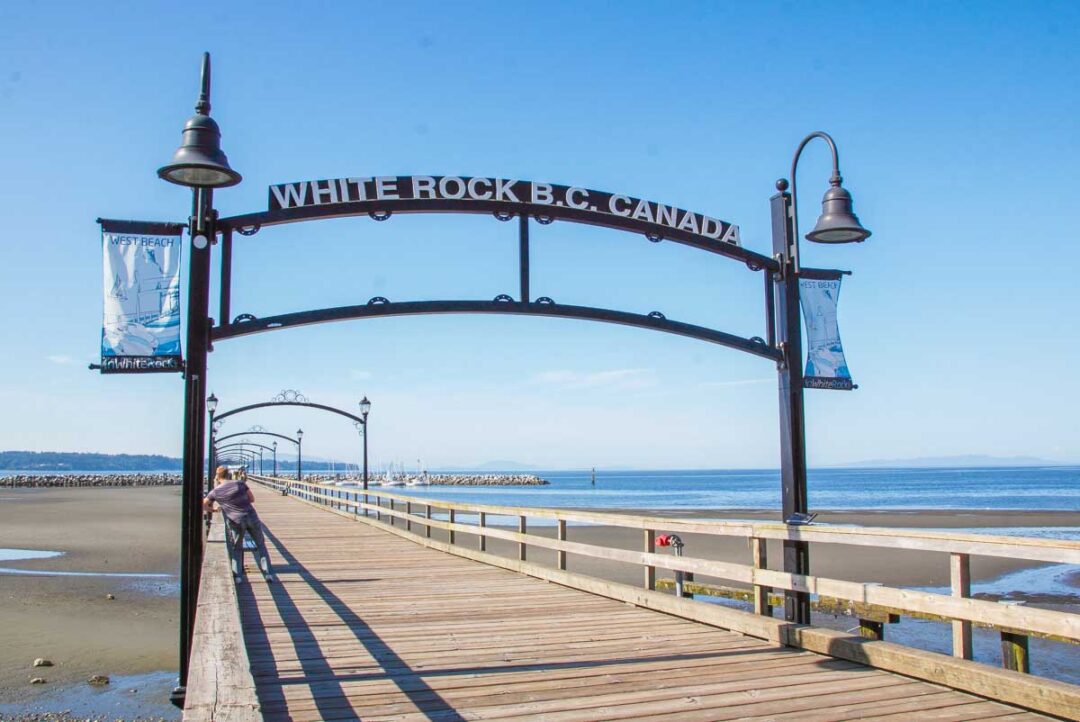
The White Rock area adds Marine Drive's restaurant row and the White Rock Pier promenade — a genuine lifestyle amenity that South Surrey residents treat as their own backyard.

Outdoor Living

Few Metro Vancouver communities can match South Surrey for variety and quality of outdoor space.

Beaches and Waterfront

Crescent Beach and White Rock Beach are the two primary oceanfront destinations — both easily accessible and beloved by locals year-round. Blackie Spit at the tip of Crescent Beach is a particularly special spot for walking, birdwatching, and taking in the views across Boundary Bay.

Parks and Trails

Elgin Heritage Park sits along the Nicomekl River and offers walking trails, a restored heritage farm, and open green space. Redwood Park is a unique gem — an old-growth grove of towering redwood trees planted in the late 1800s, tucked quietly into a South Surrey neighbourhood and free to visit year-round.

The Bottom Line

South Surrey offers something genuinely rare in Metro Vancouver: a community that delivers on schools, lifestyle, nature, amenities, and long-term value all at once. Whether you're a growing family, a professional relocating from Vancouver, or a buyer looking for the best lifestyle return on your investment, South Surrey deserves serious consideration.

Jared Gibbons specializes in South Surrey and the surrounding communities, with deep knowledge of every neighbourhood, price range, and market condition in the area. If you're thinking about making the move, the best first step is a conversation.

Ready to find your home in South Surrey? Browse current South Surrey listings or contact Jared directly to find out exactly what your budget gets you in 2026.

Read

Cloverdale Surrey: The Underrated Neighbourhood Smart Buyers Are Watching in 2026

Cloverdale doesn't get the same headlines as South Surrey or Willoughby — but buyers who take the time to look here consistently walk away impressed. This is one of Surrey's most distinctive communities, where a genuine historic town centre, strong schools, and detached homes at accessible prices come together in a way that's increasingly hard to find in Metro Vancouver.

If you're searching for real character, real value, and a neighbourhood that feels like an actual community, Cloverdale deserves a serious look.

Where Is Cloverdale?

Cloverdale sits in the southeast corner of Surrey, bordered by Langley to the east. It's anchored by a historic town centre along 176 Street — one of the few areas in the entire Lower Mainland that has preserved its small-town commercial character through decades of suburban growth around it.

The area is well-connected to the rest of Surrey and Metro Vancouver via Highway 10 and Highway 17, and it sits close to the Langley border — giving residents easy access to both Langley and Surrey amenities.

Home Prices in Cloverdale (2026)

Cloverdale offers some of the strongest value for detached homes in the entire Surrey market — and that gap is becoming more noticeable as South Surrey homes for sale continue to push higher.

Detached Homes

Detached homes in Cloverdale typically range from $1.1M to $1.8M, depending on the sub-area, lot size, and age of the home. Historic Cloverdale tends to offer older character homes at the lower end of that range, while Clayton Heights delivers newer construction closer to the top.

Compared to South Surrey — where detached homes start at $1.4M and climb quickly — Cloverdale offers meaningfully more home per dollar, particularly for families who prioritize lot size and square footage over ocean proximity.

Townhomes

Cloverdale townhomes typically range from $750K to $1.1M, with the newest and largest units in Clayton Heights commanding the higher end. For buyers looking at Surrey homes for sale in the townhome segment, Cloverdale and Clayton Heights consistently offer better value than comparable product in Langley's Willoughby Heights market.

Neighbourhood Character

This is where Cloverdale truly stands apart from every other Surrey neighbourhood — and why buyers who discover it tend to stay.

Historic Cloverdale

The original Cloverdale town centre along 176 Street is genuinely charming — boutique shops, heritage buildings, locally owned restaurants, and a walkable main street that feels nothing like a typical suburban commercial strip. It has a pace and personality that newer planned communities simply can't replicate.

Cloverdale is also home to the Cloverdale Rodeo, the largest rodeo in western Canada, held annually at the Cloverdale Fairgrounds. It's a reflection of the area's deep equestrian and agricultural roots — and a community tradition that draws tens of thousands of visitors each year.

Clayton Heights

Clayton Heights is the newer, family-oriented counterpart to Historic Cloverdale. Built out primarily over the past 15 years, it offers modern townhomes and detached homes on well-planned streets with parks, schools, and retail built in from the start.

It attracts buyers who want newer construction and a family-friendly environment while still benefiting from Cloverdale's lower price point compared to South Surrey and central Langley. If you've been looking at Brookswood or Willoughby Heights, Clayton Heights is worth a direct comparison.

Schools in Cloverdale

School quality in Cloverdale is strong across both sub-areas, with a good mix of traditional and standard public school options.

Elementary Schools

Cloverdale Traditional Elementary offers a structured, back-to-basics curriculum that appeals strongly to families who prefer a more formal educational environment. Sunrise Ridge Elementary serves the newer Clayton Heights community and has quickly built a strong reputation since opening.

Secondary Schools

Lord Tweedsmuir Secondary is Cloverdale's established high school with a long track record in academics and athletics. Clayton Heights Secondary serves the newer part of the community and has grown rapidly alongside the neighbourhood — offering strong programs in a modern facility.

Commute and Transit

Cloverdale is a car-dependent community today — but that's about to change in a meaningful way.

Driving

Most of Cloverdale is approximately a 40-minute drive to downtown Vancouver via Highway 10 connecting to Highway 17 or the Alex Fraser Bridge. King George Boulevard also provides a direct route north into central Surrey and beyond.

SkyTrain Coming

The Surrey-Langley SkyTrain extension — currently under construction — will bring rapid transit significantly closer to Cloverdale. When complete, this extension will dramatically improve transit access for Cloverdale residents and is widely expected to have a positive impact on property values along the corridor. Buyers getting into Cloverdale now are positioning themselves ahead of that infrastructure investment.

Shopping and Amenities

Cloverdale's amenities are more varied than most buyers expect before they visit.

Local Shopping and Recreation

The historic downtown strip on 176 Street offers a curated mix of antique shops, local restaurants, hair salons, and specialty retailers that give the area a genuine neighbourhood feel. The Cloverdale Athletic Park is one of Surrey's best recreational facilities — featuring multiple sports fields, an indoor arena, and year-round programming for kids and adults.

Nearby Regional Shopping

Willowbrook Mall in Langley is just minutes east of Cloverdale and provides full-scale retail including major anchors, restaurants, and services. Combined with the local downtown strip, Cloverdale residents have strong shopping options in both directions without needing to travel to central Surrey.

Who Is Cloverdale Best For?

Cloverdale attracts a specific kind of buyer — and those buyers tend to be very happy with the decision.

Families Wanting Detached Homes at Better Prices

For families who need a detached home with a yard but can't stretch to South Surrey homes for sale pricing, Cloverdale delivers. The $1.1M–$1.8M detached range here buys significantly more space than comparable South Surrey or Langley alternatives, with strong schools and a safe, family-oriented environment.

Buyers Who Value Character and Community

Cloverdale has something most newer suburbs don't — a genuine sense of place. The historic town centre, the rodeo tradition, the equestrian roots, and the tight-knit community identity make this feel like a real neighbourhood rather than a development.

Equestrian and Hobby Farm Buyers

The Cloverdale and South Langley corridor remains one of the last accessible areas in Metro Vancouver for equestrian properties, hobby farms, and larger lots. Buyers with horses or those who want acreage will find more options here than almost anywhere else within a 40-minute drive of Vancouver.

The Bottom Line

Cloverdale is the kind of neighbourhood that rewards buyers who look beyond the obvious. The prices are compelling, the character is genuine, the schools are strong, and the coming SkyTrain extension adds a layer of long-term upside that few other communities in this price range can offer.

Jared Gibbons knows the Cloverdale and Clayton Heights markets in detail — from the historic streets near 176 Street to the newest phases of Clayton Heights development. If you're ready to explore what's available, there are two great ways to start.

Search current Cloverdale listings to see what's on the market right now — or contact Jared for a straight answer on where your budget goes furthest in 2026.

Read

Beyond Vancouver: The Best Value Communities to Buy a Home in BC (2026)

Vancouver is one of the most expensive cities in North America — and in 2026, that reality hasn't changed. Detached homes in the city regularly push past $2M, and even condos sit well above $700K in most neighbourhoods.

The good news is that within a 45 to 90-minute radius of downtown Vancouver, there are communities offering detached homes, strong schools, and genuine quality of life at a fraction of the city's price. Here's a straight comparison of the best-value suburbs — ranked from most accessible to best overall lifestyle value.

1. Chilliwack — Most Accessible Entry Point on the List

Avg. detached price: from $750K | Commute: ~90 min via Hwy 1

If budget is the primary driver, Chilliwack delivers. Detached homes here start well below $800K, making it the most accessible entry point for buyers looking beyond the Lower Mainland.

Surrounded by mountains, the Fraser River, and some of BC's most scenic farmland, Chilliwack offers far more lifestyle than its price tag suggests. The 90-minute commute is the main trade-off, which is why this city has become a magnet for remote workers and hybrid employees who only need to be in Vancouver a few days a week.

Who It's Best For

Best for: Remote workers, retirees, first-time buyers, cash-flow investors. Pros: Strong rental market, outdoor lifestyle, exceptional value per square foot. Cons: Long commute, fewer urban amenities than closer suburbs.

Chilliwack homes for sale

2. Mission — Small-Town Feel, Riverside Living

Avg. detached price: from $850K | Commute: ~75 min via Hwy 7 or West Coast Express

Mission sits on a bluff above the Fraser River and offers a quieter, more tightly knit community than most suburbs on this list. Detached homes start around $850K, and the West Coast Express train provides a rare transit option for commuters.

Mission attracts buyers who want acreage, hobby farms, and true small-town character without going as far as Chilliwack. The surrounding nature — hiking trails, lakes, and river access — is genuinely exceptional.

Who It's Best For

Best for: Families wanting space and nature, acreage buyers, West Coast Express commuters. Pros: West Coast Express access, riverside setting, strong community feel. Cons: Limited urban amenities, longer drive than most options on this list.

3. Abbotsford — Fastest-Growing City in BC

Avg. detached price: from $900K | Commute: ~60 min via Hwy 1

Abbotsford homes for sale have been drawing buyers from across the region, and for good reason. Abbotsford is officially the fastest-growing city in BC, with a University of the Fraser Valley campus, a growing hospital district, and expanding retail and infrastructure.

Detached homes start around $900K, offering significantly more space and lot size than anything comparable closer to Vancouver. Schools are strong, the community is family-oriented, and the city's growth trajectory makes it appealing for investors and end-users alike.

Who It's Best For

Best for: Families, investors, buyers wanting newer construction at lower prices. Pros: Fast growth, strong schools, university town, solid value per square foot. Cons: 60-minute commute, no SkyTrain access.

4. Maple Ridge — Nature, Outdoors & Equestrian Living

Avg. detached price: from $950K | Commute: ~50 min via Hwy 7

Maple Ridge is the closest thing to rural living you'll find within 50 minutes of Vancouver. Maple Ridge homes for sale range from townhomes and newer detached builds to acreage properties and equestrian estates.

The community has a strong outdoors culture, with Golden Ears Provincial Park, the Alouette River, and dozens of trails right on the doorstep. Haney Place serves as the walkable town centre, and the area has seen meaningful new development in recent years.

Who It's Best For

Best for: Outdoor enthusiasts, equestrian buyers, families wanting space. Pros: Nature access, acreage options, 50-minute commute, strong community identity. Cons: No SkyTrain, limited urban retail, highway-dependent commute.

5. Langley — Growing Fast With Great Schools

Avg. detached price: from $1.1M | Commute: ~45 min via Hwy 1

Langley homes for sale have been among the most searched in the Lower Mainland, with Willoughby leading the charge. This master-planned community has seen explosive growth — new townhomes, detached homes, retail, and schools built out rapidly over the past decade.

Langley City offers a walkable downtown, and the upcoming SkyTrain extension will be a major game-changer for commuters when it opens.

Who It's Best For

Best for: Families wanting newer construction, buyers tracking the SkyTrain corridor, first-time buyers moving up from condos. Pros: Top schools, SkyTrain coming, strong Willoughby growth corridor. Cons: Peak-hour traffic on Hwy 1, some areas still feel suburban-generic.

6. Surrey (North & Central) — Best Transit Access Outside Vancouver

Avg. detached price: from $1.1M | Commute: ~35 min via SkyTrain or King George Blvd

Surrey homes for sale offer the strongest transit value on this list. North and Central Surrey are anchored by Surrey Central SkyTrain station and a rapidly developing city centre that includes a university district, hospital, and growing cultural infrastructure.

For buyers who rely on transit, Surrey is the most practical option outside Vancouver itself. The community is one of the most diverse in BC, with housing options ranging from detached homes to purpose-built rentals.

Who It's Best For

Best for: Transit-dependent commuters, investors, buyers wanting urban amenities at suburban prices. Pros: SkyTrain access, proximity to Vancouver, strong rental demand. Cons: Some pockets still developing, varies significantly by neighbourhood.

7. South Surrey & White Rock — Best Lifestyle Value on the List

Avg. detached price: from $1.4M | Commute: ~50 min via Hwy 99

South Surrey homes for sale and White Rock homes for sale sit at the top of this list on price — but they also sit at the top on lifestyle, school quality, and long-term value. South Surrey offers newer construction, top-ranked schools including Semiahmoo Secondary's IB program, and walkable retail at Morgan Crossing.

White Rock adds an oceanfront lifestyle, the Marine Drive promenade, and a community feel that buyers consistently pay a premium to access. For families who can stretch to the $1.4M–$2M range for detached homes, or buyers considering South Surrey townhomes in the $900K–$1.4M range, this area delivers the best overall lifestyle return in the Lower Mainland.

Who It's Best For

Best for: Families wanting top schools and lifestyle, downsizers, buyers prioritizing long-term resale value. Pros: Ocean proximity, top schools, walkable amenities, strong consistent demand. Cons: Higher entry price, no SkyTrain, US border traffic on Hwy 99.

Affordable Communities Near Vancouver 2026
City Avg. Detached Price Commute to Vancouver Best For
ChilliwackFraser Valley
From $750K
~90 min
Remote WorkersFirst-Time BuyersInvestors
MissionFraser Valley
From $850K
~75 min
Small-Town LifestyleAcreage Buyers
AbbotsfordFraser Valley — Fastest Growing City in BC
From $900K
~60 min
FamiliesInvestorsUniversity Area
Maple RidgeMetro Vancouver East
From $950K
~50 min
Outdoor LifestyleEquestrianAcreage
LangleyMetro Vancouver — SkyTrain Coming
From $1.1M
~45 min
FamiliesTop SchoolsWilloughby
SurreyNorth & Central — SkyTrain Access
From $1.1M
~35 min
Transit CommutersInvestorsUrban Amenities
Affordable Communities Near Vancouver
ChilliwackFraser Valley
From $750K
~90 min to Vancouver
Remote WorkersFirst-Time BuyersInvestors
MissionFraser Valley
From $850K
~75 min to Vancouver
Small-Town LifestyleAcreage Buyers
AbbotsfordFraser Valley — Fastest Growing City in BC
From $900K
~60 min to Vancouver
FamiliesInvestorsUniversity Area
Maple RidgeMetro Vancouver East
From $950K
~50 min to Vancouver
Outdoor LifestyleEquestrianAcreage
LangleyMetro Vancouver — SkyTrain Coming
From $1.1M
~45 min to Vancouver
FamiliesTop SchoolsWilloughby
SurreyNorth & Central — SkyTrain Access
From $1.1M
~35 min to Vancouver
Transit CommutersInvestorsUrban Amenities


The Bottom Line

Every community on this list offers genuine value compared to Vancouver — but they serve very different buyers. If budget is the primary consideration, Chilliwack and Mission deliver the most home for the dollar. If you're balancing commute, schools, and lifestyle, Langley and Surrey hit a strong middle ground.

And if you can stretch to the $1.4M range, South Surrey and White Rock offer the best lifestyle per dollar in the entire Lower Mainland — ocean access, top-ranked schools, newer construction, and a market that holds its value through every cycle.

Jared Gibbons works across this entire corridor and knows each of these markets in depth. If you're trying to figure out where your budget goes furthest — and what trade-offs actually matter — he can give you a straight answer based on your specific situation.

Take the first step today. Book a free buyer consultation and find out exactly where your money goes furthest in 2026.

Read

South Surrey or White Rock: Which Community Fits Your Life in 2026?

Two of Metro Vancouver's most desirable communities sit just minutes apart — yet they offer entirely different ways of life. South Surrey and White Rock share a border and a postal code area, but buyers who do their homework quickly realize these neighbourhoods serve very different needs.

If you're weighing your options along the southern corridor of Metro Vancouver, this guide breaks down what actually matters: price, lifestyle, schools, commute time, and who each community is best suited for.

Price Comparison: What Does Real Estate Actually Cost in 2026?

Understanding the price landscape is the natural starting point, and both areas offer a range of options depending on what you're looking for.

South Surrey Prices

Detached single-family homes in South Surrey typically fall between $1.6M and $2.2M, with newer builds and larger lots in neighbourhoods like Morgan Creek trending toward the higher end. South Surrey luxury homes in gated or golf course communities can push well beyond that range.

For buyers looking to enter at a lower price point, South Surrey townhomes are a popular option, generally ranging from $900K to $1.4M. These offer modern layouts, private garages, and strong resale value in a family-friendly setting.

White Rock Prices

In White Rock, pricing depends heavily on proximity to the water. Oceanfront or ocean-view detached homes regularly start at $2M and climb significantly from there, reflecting both the scarcity of that inventory and the lifestyle premium buyers are willing to pay.

That said, White Rock's condo market offers a more accessible entry point. White Rock condos for sale typically range from $500K to $900K, making this area attractive for downsizers, retirees, and buyers who want a beach-adjacent lifestyle without the cost of a detached home.

White Rock beachfront and Marine Drive promenade on a sunny BC afternoon

Lifestyle & Community Vibe

This is where the two communities diverge most clearly — and it usually comes down to what you want your daily life to feel like.

South Surrey: Family-Oriented Suburban Living

South Surrey is built for families and active suburban living. The area has seen significant development over the past decade, resulting in newer construction, well-planned streetscapes, and a strong concentration of walkable retail.

Morgan Crossing and Grandview Corners offer everything from grocery stores and coffee shops to fitness studios and restaurants. Community parks, sports fields, and recreation centres round out an infrastructure that's clearly designed with families in mind.

White Rock: Relaxed Beach Town Energy

White Rock operates at a different frequency. The Marine Drive promenade and the iconic White Rock Pier anchor a community that feels more like a coastal retreat than a suburb.

Locally owned restaurants, weekend markets, and the rhythm of beach life give White Rock a relaxed, village-style character that appeals strongly to those looking to slow down. For buyers seeking a quieter pace — particularly empty nesters and retirees — this lifestyle is hard to replicate anywhere else in Metro Vancouver.

Schools: A Key Factor for Families

For buyers with children, school access often shapes the neighbourhood decision as much as price does.

Schools in South Surrey

South Surrey has built a strong reputation for education. Sunnyside Elementary and Grandview Heights Secondary serve growing family populations in newer developments. Semiahmoo Secondary offers the prestigious International Baccalaureate (IB) program — one of the key draws for families relocating from other parts of Metro Vancouver.

For those considering private education, Southridge School offers a K–12 independent school experience with strong academic and athletic programming, drawing students from across the region.

Schools in White Rock

White Rock is served by Ray Shepherd Elementary and Elgin Park Secondary, both well-regarded schools with strong community ties. While the school selection is more limited compared to South Surrey's catchment variety, both schools serve their communities well.

Families prioritizing the widest range of public and private school options will generally find South Surrey's education landscape more diverse.

Commute to Vancouver: How Long Is the Drive?

Neither community is a quick commute — but both are manageable for those working in Vancouver or Burnaby.

South Surrey Commute

From most parts of South Surrey, expect a 45 to 55-minute drive into downtown Vancouver via Highway 99 or King George Boulevard, depending on traffic and time of day. South Surrey's proximity to the Hwy 99 on-ramp at 32nd Avenue gives it a slight edge for drivers heading north during peak hours.

White Rock Commute

White Rock sits slightly further east and south, placing it in a comparable range — typically 50 to 55 minutes via King George Boulevard. Buses connecting to Surrey Central Station provide a transit option, though most residents in both communities rely on personal vehicles.

Both communities also sit close to the Peace Arch and Pacific Highway border crossings — a practical bonus for frequent US travelers and remote workers with cross-border flexibility.

South Surrey residential neighbourhood with newer single-family homes and green streetscapes

Who Should Choose South Surrey?

South Surrey homes for sale are best suited for:

  • Growing families who want newer construction, dedicated school catchments, and recreational amenities

  • Buyers seeking townhomes in the $900K–$1.4M range with modern finishes and strong community infrastructure

  • Professionals who want suburban space with walkable retail and easy highway access

  • Investors targeting high-demand family markets with consistent resale activity

  • Anyone prioritizing school choice — including IB programming and private schools like Southridge

Who Should Choose White Rock?

White Rock homes for sale are best suited for:

  • Downsizers and retirees who want a walkable, ocean-adjacent lifestyle with a strong sense of community

  • Condo buyers looking to enter the market between $500K–$900K with standout lifestyle perks

  • Buyers willing to pay a premium for ocean views, waterfront proximity, and a relaxed pace of living

  • Empty nesters transitioning out of a large family home who still want proximity to Metro Vancouver

The Bottom Line

South Surrey and White Rock are both exceptional places to live — they simply serve different chapters of life exceptionally well. South Surrey delivers the space, schools, and suburban infrastructure that growing families need. White Rock offers the lifestyle, views, and community character that buyers consistently pay a premium to access.

Working with someone who knows both markets makes a real difference when the stakes are this high. Jared Gibbons has spent his career focused on this specific corner of Metro Vancouver, helping buyers find the right fit based on their budget, lifestyle, and long-term goals — without the guesswork.

Ready to figure out which community is right for you? Get a free home evaluation and get a clear picture of what your next move looks like.

Read

New Save-On-Foods and 452 Apartments Coming to Brookswood, Langley

A major mixed-use development is moving forward in Brookswood — and if you own or are thinking of buying property in this part of Langley Township, it's worth paying attention.

Jim Pattison Developments has proposed a large project on a nine-acre site at the northeast corner of 32 Avenue and 200 Street. The plan includes 452 new apartments and 134,300 square feet of commercial and office space, anchored by a Save-On-Foods grocery store.

Where Things Stand

On February 23, Langley Township council passed first, second, and third readings of the rezoning bylaw — voting eight to one in favour. The lone dissenting vote was Councillor Kim Richter. The project aligns with the Brookswood-Fernridge Neighbourhood Plan, which has long designated this area for a commercial village hub, so this has been in the works for some time.

What the Developer Is Contributing

Beyond housing and retail, the developer has made two notable commitments to the community:

A shell space for a future neighbourhood recreation centre — the Township would fund the interior fit-out separately. A voluntary amenity contribution of $4.72 million, which the Township can direct toward rec centres, libraries, and other community facilities.

A Note on Public Hearings

There will be no public hearing for this project. Under recent changes to the BC Community Charter aimed at speeding up housing approvals, local governments cannot hold public hearings for developments that already align with an existing neighbourhood plan. Councillor Richter pushed for one but was advised it isn't permitted under current provincial rules.

What Happens Next

Rezoning approval is not the final step. The developer still needs to submit detailed plans and obtain development permits before construction can begin. There are several steps remaining before shovels go in the ground.

What This Means for Brookswood

For residents and property owners in Brookswood, this is one of the most significant developments in years — bringing more housing supply, a major grocery anchor, and new community amenities to a neighbourhood that has been growing steadily. Property values in areas surrounding new commercial nodes like this tend to strengthen as infrastructure improves.

Thinking about buying or selling in Brookswood or Langley? Contact Jared for an up-to-date market assessment.


Read

Musqueam First Nation Signs Historic Agreements with the Federal Liberal Government

In a development drawing significant attention across British Columbia, the Musqueam Indian Band has signed three landmark agreements with the Government of Canada — formally recognizing the First Nation's Aboriginal rights and title within their traditional territory. Announced on February 20, 2026, these deals mark one of the most consequential steps toward Indigenous reconciliation in BC in recent years. To understand what this agreement means for the community and the broader region, it helps to look at each deal individually and in context.

What Are the Three Musqueam Agreements?

The three deals signed between the Musqueam First Nation and the federal Liberal government each address a distinct area of governance and rights, forming a coordinated framework for the incremental implementation of Musqueam Aboriginal rights under the Canadian Constitution.

The first and most significant is the šxʷq̓ʷal̕təl̕tən Rights Recognition Agreement, which formally acknowledges that Musqueam holds Aboriginal rights — including title — within their traditional territory. Rather than a sweeping transfer of authority, it establishes a structured, step-by-step process for implementing those rights through an ongoing nation-to-nation relationship with Canada. The second, the xʷməθkʷəy̓əm Stewardship & Marine Management Agreement, creates bilateral working groups that bring Musqueam knowledge and traditional stewardship practices into shared decision-making over the waters and resources within Musqueam territory — including collaboration with the Canadian Coast Guard on marine emergency response. The third focuses on fisheries, granting the Musqueam Band shared decision-making authority over fisheries management within their territory, along with funding for vessels and fishing gear to support long-term sustainable resource management.

To explore Indigenous economic initiatives in BC and understand how these types of agreements are structured across the province, the BC government's First Nations partnerships page offers helpful context.

What Is Musqueam's Traditional Territory?

Understanding the scope of these Musqueam land agreements requires understanding the geographic footprint of the Nation's ancestral homeland. According to the BC Treaty Commission, Musqueam's traditional territory includes West Vancouver, North Vancouver, Vancouver, the University Endowment Lands, Burnaby, Port Moody, New Westminster, Richmond, Vancouver International Airport, the northern areas of Delta and Surrey, and surrounding waterways. This region is home to an estimated 1.8 million British Columbians, making these BC government agreements particularly significant in terms of their geographic reach and long-term governance implications.

For those interested in Musqueam community land and investment activity across the Lower Mainland, the Musqueam First Nation's official website outlines the Nation's ongoing economic and development initiatives in detail.

A Nation-to-Nation Approach to BC Reconciliation Efforts

Musqueam Chief Wayne Sparrow has been consistent about the Nation's approach: negotiation and partnership over litigation. In a statement following the signing, Chief Sparrow said the Government of Canada is now "acknowledging Musqueam's Aboriginal title and rights to our traditional territory and recognizing our expertise in both marine management and fisheries management."

Musqueam leadership has also directly addressed concerns from BC residents about what these agreements mean for private property. Chief Sparrow stated clearly that "Musqueam is not coming for anyone's private property," describing the Nation's approach as "one of partnership and relationship with our neighbours." These BC reconciliation efforts are being framed not as jurisdictional conflict but as a practical path forward — one grounded in the Canadian Constitution and built through over a decade of direct negotiation.

Federal Minister of Crown-Indigenous Relations Rebecca Alty echoed this, describing the agreements as concrete action toward building "a stronger, more united Canada." To understand the federal and provincial roles in shaping these types of deals, the Government of Canada's Indigenous Relations page provides a useful overview of how federal-provincial Indigenous agreements are developed and implemented.

Building on a Strong Foundation of Indigenous Economic Development in BC

These agreements don't exist in isolation. They follow a series of recent milestones that reflect a broader strategy around Indigenous economic development in BC and the expansion of Musqueam's governance and economic footprint. In March 2025, Musqueam initialed a Self-Government Agreement, and in February 2025 signed a Vancouver International Airport Revenue Sharing Agreement that sets aside a portion of federal airport revenue for the First Nation.

The First Nation's economic activities are managed by the Musqueam Capital Corporation and include the Fraser Arms property, Milltown Marina, the Musqueam Golf & Learning Academy, and the University Golf Club. Musqueam is also part of MST Development Corporation — a $1 billion joint venture with the Squamish Nation and Tsleil-Waututh Nation — overseeing the development of 65 hectares of land in Metro Vancouver.  These Musqueam community benefits reflect a First Nation that has spent decades building the economic and governance infrastructure to match its rights-based vision.

How Government Partnerships Impact Local Growth

For readers wondering how government partnerships impact local growth across communities in Metro Vancouver and the Fraser Valley, the Musqueam agreements offer a compelling case study. When First Nations gain recognized authority over fisheries, marine resources, and land stewardship, the downstream effects touch environmental policy, infrastructure planning, and economic investment across entire regions. The Musqueam Nation's model — built on negotiated frameworks rather than adversarial court battles — is increasingly being looked at as a template for BC Indigenous relations going forward.

Lead negotiator Wendy Grant-John noted that these agreements are "the result of more than ten years of discussions, collaboration and negotiation" — a reminder that meaningful reconciliation is rarely quick, but the outcomes can be far-reaching and durable.

Context: BC's Broader Indigenous Rights Landscape

These agreements are being signed at a pivotal moment in BC Indigenous relations. Debates over Indigenous rights, land use, and resource development have become increasingly polarized in British Columbia, with disputes over land title, conservation areas, and economic development projects raising questions about how Indigenous authority fits within provincial and federal systems.

Musqueam is among several parties appealing the BC Supreme Court's August 2025 Cowichan Tribes decision, which granted Aboriginal title to parts of Vancouver Island and prompted widespread concern about property rights across the province. The contrast between that litigation path and Musqueam's negotiated approach is notable. For those tracking federal-provincial Indigenous agreements across Canada, the Musqueam deals represent a preferred model: incremental, constitutionally grounded, and focused on practical co-governance.

To learn more about Musqueam partnerships and how the Nation communicates these developments directly to the public, their official statement on these agreements is a valuable primary source.

What This Means Going Forward

The signing of these three agreements between the Musqueam Band and the federal Liberal government is a defining moment in Indigenous reconciliation in BC. Whether viewed through the lens of constitutional law, resource management, or community investment, the deals signal that the relationship between BC First Nations and Canadian governments is entering a more structured, partnership-driven phase.

For residents and stakeholders across Metro Vancouver, the message from Musqueam leadership is clear: this is about partnership, not displacement. For those tracking land use, governance, and Indigenous economic development in BC, these agreements are worth following closely as implementation unfolds in the months and years ahead.

Jared Gibbons is a South Surrey and Langley-based real estate professional with a close eye on land use, community development, and the local factors that shape long-term property values across the Lower Mainland.

Read
Reciprocity Logo The data relating to real estate on this website comes in part from the MLS® Reciprocity program of either the Greater Vancouver REALTORS® (GVR), the Fraser Valley Real Estate Board (FVREB) or the Chilliwack and District Real Estate Board (CADREB). Real estate listings held by participating real estate firms are marked with the MLS® logo and detailed information about the listing includes the name of the listing agent. This representation is based in whole or part on data generated by either the GVR, the FVREB or the CADREB which assumes no responsibility for its accuracy. The materials contained on this page may not be reproduced without the express written consent of either the GVR, the FVREB or the CADREB.