
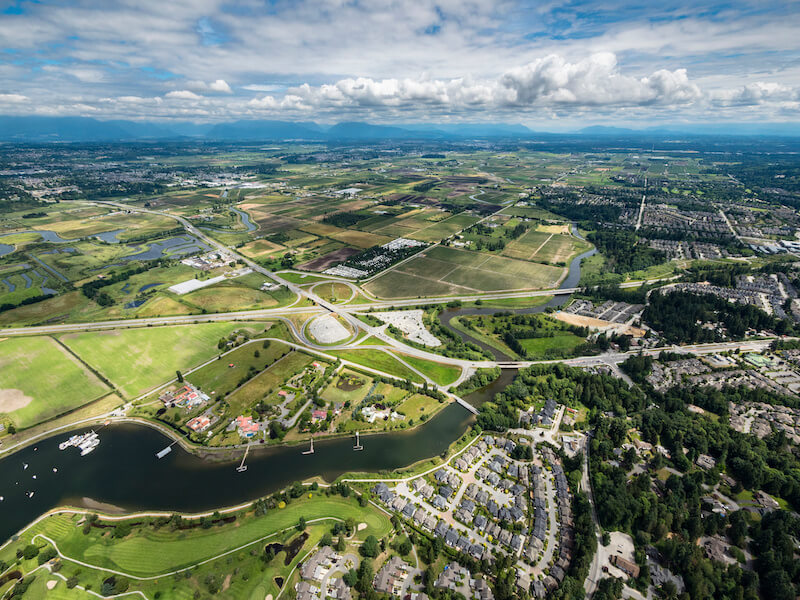
About 75% of Langley Township's land is in the Agricultural Land Reserve (ALR), according to the Township. If you're picturing a few acres and a barn, the ALR will likely shape what you can build and do. Here's a plain-language overview, plus what came up at a rural all-candidates event ahead of the October 17, 2026 municipal election.
Buying acreage in Langley: start with the ALR
The ALR is a provincial land-use zone where agriculture is the priority use. The Agricultural Land Commission (ALC) says a few points often surprise buyers:
ALC rules come first. Zoning can't allow what ALR rules don't without ALC approval, and local governments can be stricter.
Minimum lot sizes in zoning don't mean you can subdivide. Subdivision in the ALR is tightly controlled.
Existing buildings or uses aren't proof of approval. They may not comply with ALR rules.
Confirm ALR status yourself. Use the ALC's ALR map, since a title's ALR notation isn't definitive. The rules apply only to the part of a property inside the ALR.
Expect farm noise, dust and odours. Normal farm practices are protected under BC's Right to Farm legislation.
ALR rules in Langley Township: houses, suites and additional residences
The ALC's Housing in the ALR page sets out the provincial limits:
One residence per parcel, generally. Most ALR properties can have one principal residence of up to 500 m² without an application, with no more than 1,000 m² of fill, including the driveway.
Secondary suite. Only inside the principal residence, if local bylaws allow.
One additional residence, in some cases. It must be detached, and the property can have only one residence when construction begins. It can be up to 90 m² on properties of 40 ha or less, or 186 m² on larger ones, and only if the main home is within the ALC's permitted size. It needn't be for farm help, and any fill needs a Notice of Intent to the ALC.
Anything bigger or more needs a Non-Adhering Residential Use application. The local government reviews it first, and approval isn't guaranteed.
Local governments can further restrict the number, size and siting of homes, so check what the Township allows on a specific property.
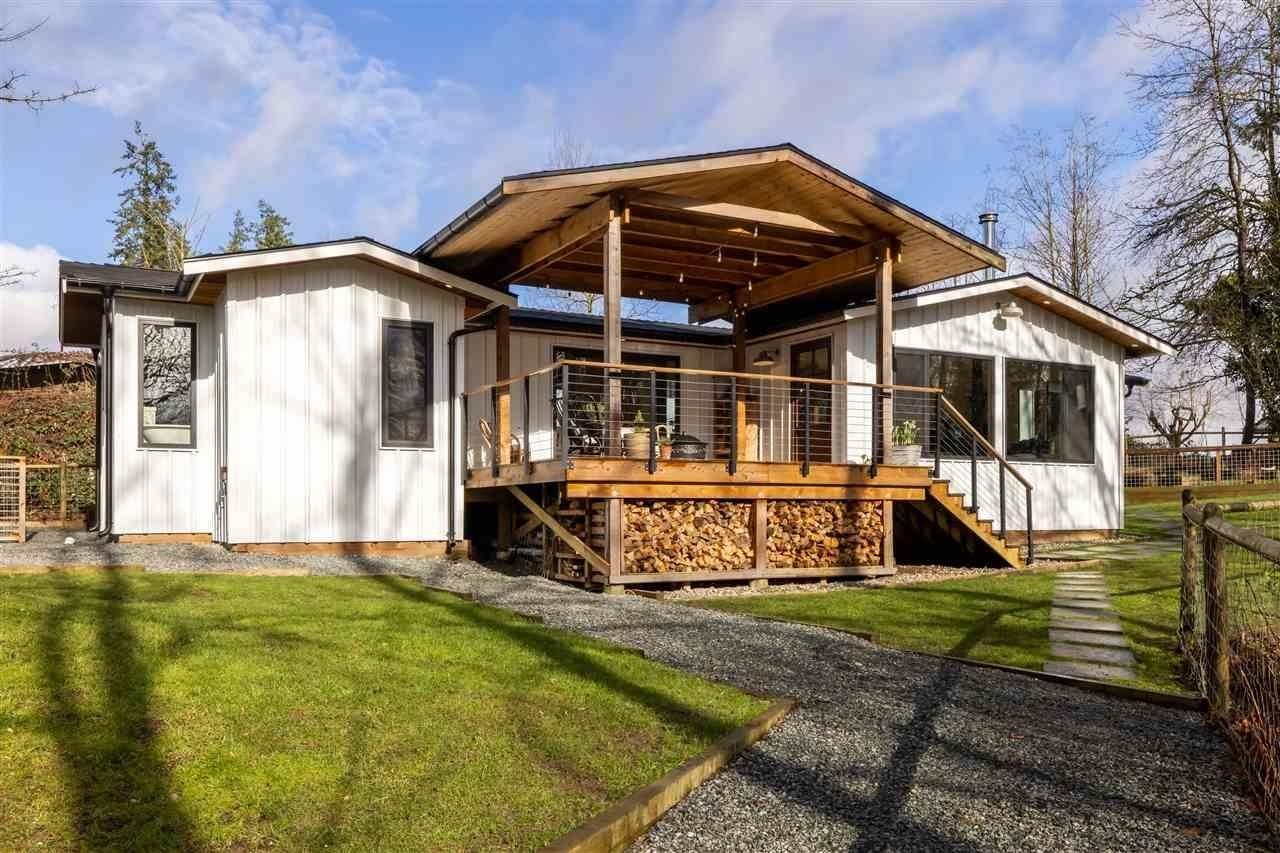
Hobby farm in Langley BC: farm uses vs. non-farm uses
Farming, raising livestock (including horses) and many farm-related activities are permitted farm uses in the ALR, per the ALC. Some non-farm uses, such as a home-based business, are permitted with conditions (local governments can prohibit some of them); others need an ALC application.
The Township says non-farm uses must also comply with its Zoning Bylaw, and ALR applications need a separate Township application. The ALC warns that a staffing shortage may delay applications. Planning a business or short-term rental? Get answers before you buy.
Langley Township's Rural Plan and zoning
The Township's Rural Plan (Bylaw No. 3250, adopted July 12, 1993 and amended since) has a primary goal of enhancing agricultural viability, while also retaining countryside character. Most of the rural area is designated Agriculture/Countryside, with a minimum lot size of 8 ha (19.8 acres), subject to ALC approval.
The Township's Zoning Bylaw No. 2500 sets permitted uses, lot coverage and building restrictions, which vary by property. The Township's GeoSource mapping tool shows a property's zoning and, under the Planning layer, its rural land use designation.
A Rural Plan update isn't formally underway. The Township's Agricultural Advisory Committee recommended one on September 24, 2025, and Council referred the request to staff on November 3, 2025. On April 22, 2026, staff told the committee they were working on terms of reference. As of October 1, 2026, there's no published timeline or public engagement page.
Well water rules in BC: what acreage buyers should know
Under BC's Water Sustainability Act, groundwater used only for domestic purposes doesn't need a licence. "Domestic" covers household use such as drinking, cooking and cleaning, water for pets or household animals, and a garden up to 1,000 m².
Beyond that, the rules tighten:
Non-domestic use needs a licence. Irrigation, commercial or industrial use requires a water licence, with a one-time application fee of at least $250 plus annual rentals.
Registration. Domestic well owners are strongly encouraged to register their well. Wells drilled, altered or decommissioned after February 29, 2016 must be in the province's GWELLS database.
Watering crops or non-household livestock? Ask FrontCounter BC whether you need a licence. Township rules also apply:
Connecting to municipal water. The Township's Waterworks Regulation Bylaw No. 6074 (s. 3.1) requires a private well to be decommissioned within 30 days of connecting to municipal water, unless the owner applies to keep it for agricultural use.
Creating new rural lots. The Subdivision and Development Servicing Bylaw No. 5382 requires each new rural lot to have a proven potable groundwater source of at least 2,500 litres per day, with limited exceptions.
Testing your water. Members of the Township's free Private Well Network get 20% off bacteria and general chemistry testing at a partner lab.
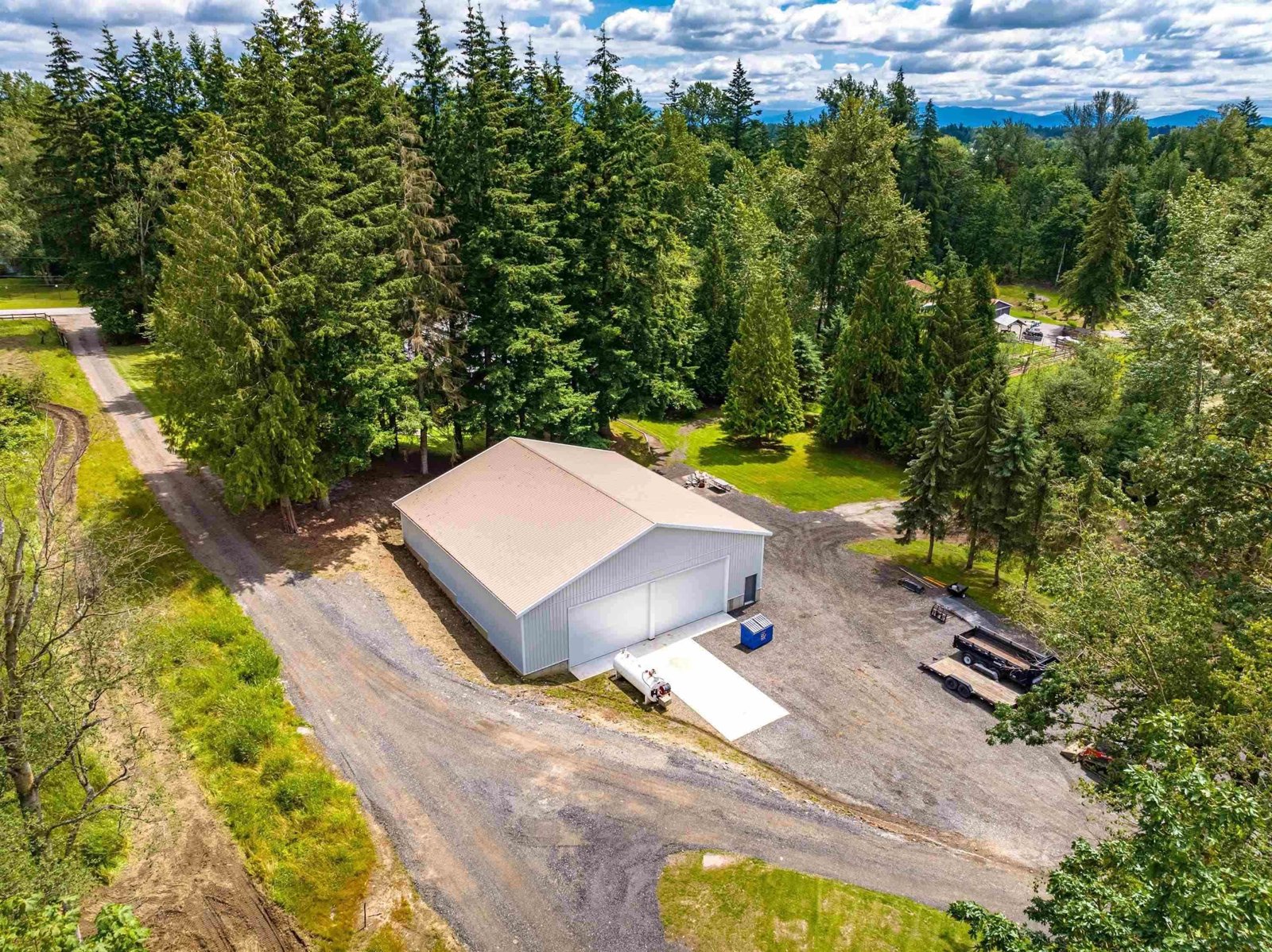
What Township candidates heard ahead of the October 17 election
On September 22, the Langley Farmers Institute hosted an all-candidates event at Coghlan Hall, reported by the Langley Advance Times. A majority of council candidates and both mayoral candidates took part, rotating through small-group stations on:
Enforcement of bylaws in agricultural areas
Truck parking in relation to the Rural Plan
Water use and zoning
The Board of Variance and agricultural issues
The Farmers Institute's Amanda Smith said the message to candidates was, "These issues are coming to you."
For context from Township records: the Zoning Bylaw lets most rural properties park up to three commercial vehicles as an accessory to residential use, and the Township has used tickets and court injunctions against unauthorized trucking. In June 2026, Council approved terms of reference for an Agricultural Bylaw Review Task Force, which runs until November 30, 2026. In February 2026, a provincial groundwater specialist told Council that 21 mapped aquifers overlap the Township, where common issues include declining water levels and contamination. The Board of Variance can consider minor zoning relaxations, such as setbacks, for undue hardship, but it isn't an appeal route for land use or density.
General voting day is Saturday, October 17, 2026, from 8 a.m. to 8 p.m., with advance voting October 6 to 10, per the Township's 2026 Elections page. Mail-in voting isn't available. The October 24 provincial election is a separate vote.
Explore Langley acreages and farms
Browse Langley acreages for sale, Langley farms and agricultural land and Langley horse properties, or rural areas like Campbell Valley, Salmon River and County Line/Glen Valley. My Langley farmland and ALR guide goes deeper.
FAQ
Is my Langley property in the ALR? Check the ALC's ALR map, not just the title notation.
Can I build a second home on ALR land? Possibly one small detached additional residence, if the property has only one home when construction begins and the main home is within the ALC's size limit. The Township can be stricter, so check with the Township and the ALC.
Can I run an Airbnb on an ALR acreage? A bed-and-breakfast of up to four bedrooms in the home you live in is allowed (stays of 30 days or less). Whole-house short-term rentals need ALC approval, and Township rules also apply.
Do I need a licence for my well? Not for household use; irrigation and other non-domestic use need a provincial licence. If you connect to Township water, the well must be decommissioned within 30 days unless you apply to keep it for agricultural use.
Can I subdivide my acreage? Not just because zoning lists a minimum lot size. ALR subdivision is tightly controlled, and each new rural lot needs a proven well water supply. Check with the Township and the ALC.
Thinking about buying or selling an acreage?
Buying a hobby farm or selling a rural property? Get a free home evaluation, or call or text me at 604-928-1361.
Disclaimer: This post is general information only and is not legal, tax, land-use or environmental advice. Rules change and every property is different. Confirm details with the Township of Langley, the Agricultural Land Commission, FrontCounter BC and qualified professionals before buying.
Sources
Matthew Claxton, "Langley Farmers Institute gathers Township council candidates," Langley Advance Times, September 26, 2026: https://langleyadvancetimes.com/2026/09/26/langley-farmers-institute-gathers-township-council-candidates/
Agricultural Land Commission, "Buying and Owning ALR Land": https://www.alc.gov.bc.ca/use-of-alr-land/buying-and-owning-land-in-the-alr/
Agricultural Land Commission, "Housing in the ALR": https://www.alc.gov.bc.ca/use-of-alr-land/housing-in-the-alr/
Agricultural Land Commission, "Permitted Uses": https://www.alc.gov.bc.ca/use-of-alr-land/permitted-uses/
Agricultural Land Commission, "Application Process": https://www.alc.gov.bc.ca/application-and-notice-process/applications/
Agricultural Land Commission, "ALR Maps": https://www.alc.gov.bc.ca/alr-maps/
Township of Langley, "Agricultural Land Use": https://www.tol.ca/en/building-development/agricultural-land-use.aspx
Township of Langley, Rural Plan (Bylaw No. 3250, consolidated): https://www.tol.ca/en/services/resources/bylaw-services/bylaws/Community-Plan-Bylaws/Rural-Community-Plan-Bylaw-%28No.-3250%29.pdf
Township of Langley, "Zoning Bylaw": https://www.tol.ca/en/building-development/zoning-bylaw.aspx
Province of BC, "Requirements for groundwater users": https://www2.gov.bc.ca/gov/content/environment/air-land-water/water/water-licensing-rights/water-licences-approvals/new-requirements-for-groundwater-users
Province of BC, "Domestic well registration": https://www2.gov.bc.ca/gov/content/environment/air-land-water/water/groundwater-wells-aquifers/information-for-well-owners/well-records-registration/domestic-well-registration
Township of Langley, Agricultural Advisory Committee minutes, September 24, 2025: https://calendar.tol.ca/meetings/Detail/2025-09-24-1900-Agricultural-Advisory-Committee/d9a382c3-4c5b-4ba7-8a44-b37d010c91a4
Township of Langley, Regular Council Meeting minutes, November 3, 2025: https://calendar.tol.ca/meetings/Detail/2025-11-03-1330-Council-Meetings/54dd79d8-be10-4704-9183-b3ae015d56fb
Township of Langley, Agricultural Advisory Committee minutes, April 22, 2026: https://calendar.tol.ca/meetings/Detail/2026-04-22-1900-Agricultural-Advisory-Committee/8ace14ee-0406-48d1-b96d-b45600fb080e
Township of Langley, GeoSource mapping tool: https://geosource.tol.ca/
Township of Langley, Waterworks Regulation Bylaw No. 6074 (consolidated): https://www.tol.ca/en/services/resources/bylaw-services/bylaws/Other-Bylaws/Langley-Waterworks-Regulation-Bylaw-%28No.-6074%29.pdf
Township of Langley, Subdivision and Development Servicing Bylaw 2019 No. 5382 (consolidated): https://www.tol.ca/en/services/resources/bylaw-services/bylaws/Development-Bylaws/Subdivision-and-Development-Servicing-Bylaw-2019-%28No.-5382%29.pdf
Township of Langley, "Private Well Network": https://www.tol.ca/en/services/private-well-network.aspx
Township of Langley, Report 24-24 on bylaw enforcement and commercial truck parking, Council agenda, February 12, 2024: https://calendar.tol.ca/meetings/Detail/2024-02-12-1330-Council-Meetings/e01ecb6b-c41c-4ec2-97b4-b111010a262a
Township of Langley, Regular Council Meeting minutes, June 15, 2026: https://calendar.tol.ca/meetings/Detail/2026-06-15-1330-Council-Meetings/6ef701b6-6acd-4f7e-8068-b47901002596
Township of Langley, Council agenda, June 15, 2026 (Agricultural Bylaw Review Task Force terms of reference): https://calendar.tol.ca/meetings/Detail/2026-06-15-1330-Council-Meetings/65266120-a878-4210-9d07-b4670167140f
Township of Langley, Regular Council Meeting minutes, February 23, 2026: https://calendar.tol.ca/meetings/Detail/2026-02-23-1330-Council-Meetings/9f09d6dd-926f-4f38-9416-b40901084fbc
Township of Langley, "Board of Variance": https://www.tol.ca/en/building-development/board-of-variance.aspx
Township of Langley, "2026 Elections": https://www.tol.ca/en/the-township/2026-elections.aspx
Township of Langley, "Voting Dates and Locations": https://www.tol.ca/en/the-township/2026-voting-dates-and-locations.aspx




.png)



























































 The data relating to real estate on this website comes in part from the MLS® Reciprocity program of either the Greater Vancouver REALTORS® (GVR), the Fraser Valley Real Estate Board (FVREB) or the Chilliwack and District Real Estate Board (CADREB). Real estate listings held by participating real estate firms are marked with the MLS® logo and detailed information about the listing includes the name of the listing agent. This representation is based in whole or part on data generated by either the GVR, the FVREB or the CADREB which assumes no responsibility for its accuracy. The materials contained on this page may not be reproduced without the express written consent of either the GVR, the FVREB or the CADREB.