BLOG

Read the Latest Real Estate News, Market Updates, and Helpful Tips

RSS

Rules accurate as of October 18, 2026, and they can change. This is general information only, not legal or tax advice. Please speak to a BC real estate lawyer and an accountant before you buy.

Can people who are not Canadian citizens or permanent residents buy farmland in BC? Yes. BC does not limit who can own farmland, including land in the Agricultural Land Reserve (ALR). But other rules can still apply to a farm or acreage with a house on it, and some of them depend on where the property is. Here is how they fit together for buyers in the Fraser Valley.

In short

  • No BC ownership limit. BC does not restrict who can own farmland. The ALR controls how land is used, and those limits apply to every owner.

  • Federal ban. It covers a house of up to three units inside a census area. Vacant land is not covered. Under current law it ends on January 1, 2027, and Ottawa has not said what comes next.

  • BC 20% foreign buyer tax. It applies in Metro Vancouver and the Fraser Valley Regional District, and BC lists no end date. On farm-class land it is charged on the house plus 0.5 hectares of land.

  • Speculation and Vacancy Tax. For foreign owners it is 3% in 2026 and 4% from 2027, on covered residential property.

  • Check again before you buy. BC held a provincial election on October 24, 2026, and a new government can change the rules.

The short answer

BC has no rule that stops a non-Canadian from owning farmland. In its response to a 2024 municipal resolution, the Ministry of Agriculture and Food said BC protects farmland through the Agricultural Land Commission Act and the ALR, “rather than through controlling ownership” (UBCM resolution EB71).

That is not the whole story for a farm with a house. Four sets of rules can matter, and each one works differently.

The four sets of rules at a glance

  • Federal home-buying ban. Set by the Government of Canada. It can stop a purchase of a covered home in a census area. Breaking it can mean a fine of up to $10,000. Under current law it ends January 1, 2027, unless Ottawa acts.
  • 20% foreign buyer tax. Set by BC. It cannot stop a purchase. It adds 20% of the value of the residential part. BC lists no end date.
  • Speculation and Vacancy Tax. Set by BC. It cannot stop a purchase. It is a yearly tax: 3% in 2026 and 4% from 2027 for foreign owners. It does not end in 2027, and the foreign-owner rate rises.
  • ALR rules. Set by BC (Agricultural Land Commission). They limit how land is used, not who owns it, so they cannot stop a purchase. Applications may be needed for some uses. They do not end in 2027.

1. The federal home-buying ban: what it covers on a farm

The Prohibition on the Purchase of Residential Property by Non-Canadians Act has been in force since January 1, 2023. It applies to anyone who is not a Canadian citizen, a person registered under the Indian Act, or a permanent resident. It also applies to foreign corporations and to some Canadian corporations that a non-Canadian controls.

  • It covers houses. That means a detached house or similar building with no more than three dwelling units, plus the land “reasonably necessary” for living in it. Semi-detached homes, rowhouses and condo units are covered too.

  • It only applies in census areas. A census area is Statistics Canada’s term for a larger city and its surrounding communities. Property outside every census metropolitan area and census agglomeration is not covered (Regulations, s. 3).

  • Vacant land is not covered. CMHC says that has been the case since March 27, 2023 (CMHC FAQ).

  • Buying for development is exempt. CMHC says ordinary repairs, renovations and remodels are not “development.”

  • Some people are exempt. Examples are a non-Canadian buying with a spouse or common-law partner who is a citizen or permanent resident, and some work-permit and student-permit holders who meet set conditions.

A non-Canadian who breaks the rule can be fined up to $10,000, and so can anyone who knowingly helps. A court can also order the home sold, and the non-Canadian would receive no more than the purchase price. The sale itself stays valid.

How much land counts? The Act covers the house and the land “reasonably necessary” for using it as a home. Whether that reaches a whole large farm parcel is a question for your lawyer, so please do not assume.

2. BC’s 20% foreign buyer tax: what it is charged on

BC charges an additional property transfer tax of 20% on foreign nationals, foreign corporations and taxable trustees who buy residential property in the Capital, Fraser Valley, Metro Vancouver, Central Okanagan and Nanaimo regional districts. It is charged on the fair market value of the buyer’s share of the property.

On a farm, the tax applies only to the residential part. BC’s page sets out three cases:

  • If the whole property is classed as residential (class 1) by BC Assessment, the tax applies to the entire value.

  • If BC Assessment classes it as farm land because of an owner’s dwelling or a farmer’s dwelling, the tax applies to the value of the house plus 0.5 hectares (about 1.2 acres) of land.

  • If it is a mixed-class property, the tax applies to the residential part only.

Some exemptions exist, for example for a confirmed BC Provincial Nominee buying a principal residence (it can be claimed once). This tax is separate from the federal ban, and the BC page lists no end date. Ask for the property’s BC Assessment class before you write an offer.

3. The Speculation and Vacancy Tax on a farm house

The Speculation and Vacancy Tax (SVT) is a yearly tax on residential property in listed areas. Those areas include the municipalities in Metro Vancouver (including both Langleys, Surrey, Delta, Maple Ridge and Pitt Meadows), plus Abbotsford, Chilliwack and Mission (BC taxable areas).

The rates are charged on the property’s assessed value. For 2026 the rate is 3% for foreign owners and untaxed worldwide earners, and 1% for Canadian citizens and permanent residents who are not untaxed worldwide earners. From January 1, 2027 the rates are 4% and 1%. Owners in taxable areas file a declaration each year by March 31, and exemptions such as a principal residence can apply.

Farms are treated differently. Under the Act, “residential property” is defined by BC Assessment class. Farm land (class 9) is not included. A house classed as residential on farm land is included, other than farm outbuildings, and property assessed at $150,000 or less is excluded. That is my plain-language reading, so ask your accountant how it applies to a specific property.

4. The ALR and non-resident ownership: rules about use, not owners

The ALR protects land for farming, and the ALC’s rules on buying and owning ALR land apply to every owner. Nothing in them depends on where the owner lives. For a buyer who plans to live on the land, the limits on housing matter most (ALC: Housing in the ALR):

  • One principal residence. Most ALR properties can have one, up to 500 m² (about 5,400 sq ft) of total floor area, without applying to the ALC. The ALC measures floor area its own way, so confirm it with your designer or local government.

  • One additional home, in some cases. It must be detached, the property can have only one home when construction starts, the main home must be within the ALC’s size limit, and it can be up to 90 m² (about 970 sq ft) on parcels of 40 hectares or less. Any fill needs a Notice of Intent to the ALC.

  • Anything larger or more needs a Non-Adhering Residential Use application, and approval is not guaranteed.

  • Local rules can be stricter. Local governments can limit the number, size and siting of homes.

  • Check the boundary. Use the ALC’s ALR map, since a title’s ALR notation is not definitive. If only part of a property is in the ALR, the rules apply to that part.

For more on how these limits work in practice, see my Langley farmland and ALR guide and my post on buying an acreage in Langley Township.

Who owns the land: BC’s transparency registry

BC also keeps a public Land Owner Transparency Registry. It records the people who own or control land indirectly, through a corporation, partnership or trust. A transparency declaration must be filed whenever an interest in land is registered, and anyone can search the registry for free.

What changes on January 1, 2027?

Under current law, the federal ban is repealed automatically on January 1, 2027. Parliament set that date in 2024 when it extended the original two-year ban (Budget Implementation Act, 2024, s. 149).

As of October 18, 2026, no decision on what comes next has been announced. In early October, Finance Minister François-Philippe Champagne told reporters, “We’re looking at all the options that we have in front of us” (Global News, October 13, 2026).

What does not change on that date: BC’s 20% tax, the Speculation and Vacancy Tax (which rises to 4% for foreign owners in 2027) and the ALR rules.

BC held a provincial election on October 24, 2026 (Elections BC). Farmland ownership came up during the campaign, and one party proposed limiting non-resident ownership of larger farm parcels. As of October 26, 2026, no such limit exists or has been announced, but rules may change, so check the current rules before you make an offer.

Fraser Valley area by area

  • Langley (City and Township), Surrey, Delta (including Ladner), Maple Ridge and Pitt Meadows: in the Vancouver census area for the federal ban, in the Metro Vancouver 20% tax region, and in an SVT area.
  • Abbotsford and Mission: in the Abbotsford–Mission census area, in the Fraser Valley 20% tax region, and in an SVT area.
  • Chilliwack: in the Chilliwack census area, in the Fraser Valley 20% tax region, and in an SVT area.
  • Kent and Harrison Hot Springs: in the Chilliwack census area and the Fraser Valley 20% tax region, but not on the SVT list.
  • Hope and rural Fraser Valley areas outside the cities: the census area varies, so check the address. They are in the Fraser Valley 20% tax region and not on the SVT list.

Based on Statistics Canada’s 2021 census areas (Vancouver, Abbotsford–Mission, Chilliwack), the BC list of 20% tax areas, which includes the six Fraser Valley Regional District municipalities and its electoral areas, and the SVT taxable areas above. Reserve, treaty and self-governing Nation lands are treated differently, and census boundaries can be tricky for rural parcels. Check each property’s address. CMHC’s FAQ links to its address lookup.

If you are buying farmland or acreage

  • Talk to a BC real estate lawyer first about your own status and which rules apply to you.

  • Check whether the address is in a census area, using CMHC’s lookup.

  • Ask for the BC Assessment class (farm or residential). It affects the 20% tax and the SVT.

  • Check the ALR map, the home-size limits, the additional-home rules and local bylaws.

  • Ask your accountant about the SVT declaration and any other tax that could apply.

If you are selling a farm or acreage

None of these rules changes how the ALR applies to your land. Price it for the buyers who are in the market today, and keep your lawyer involved when an offer comes with questions about the buyer’s legal status or financing.

FAQ

Can foreigners buy farmland in BC? Yes. BC does not limit who can own farmland, including ALR land. But the federal ban can apply to a house in a census area, the 20% tax and the SVT can apply, and ALR use rules apply to everyone.

Does the foreign buyer ban in BC apply to vacant farm land? No. The federal ban has not covered vacant land since March 27, 2023. A house on the land can be covered if the property is in a census area.

Is the federal foreign buyer ban ending? Under current law it is repealed on January 1, 2027. As of October 26, 2026, Ottawa has not announced a decision. BC’s 20% tax and the SVT are separate and do not end on that date.

Are there ALR non-resident ownership limits? No. The ALR regulates how land is used, not who owns it. Limits such as the home-size rules apply to every owner.

Does the 20% foreign buyer tax apply to a whole farm? Only to the residential part. On land classed as farm because of an owner’s or farmer’s dwelling, it applies to the house plus 0.5 hectares of land.

Looking at farms or acreages in the Fraser Valley?

Browse my pages for Fraser Valley acreages, farms and acreages, Langley farms, Surrey farms, Abbotsford farms, Chilliwack farms, Mission farms, Maple Ridge farms and Ladner farms. Questions? Please contact me, or call or text me at 604-928-1361.

Disclaimer: This post is general information only and is not legal, tax or immigration advice. Rules change and every property and buyer is different. Confirm details with a BC real estate lawyer, an accountant and the government sources below before you buy.

Update log: October 18, 2026 – first published.

About me: I’m Jared Gibbons, a REALTOR® since 2015 with Royal LePage Little Oak Realty in Langley, and I’m in the Top 1% of all Realtors in the Fraser Valley.

Sources

  1. Government of Canada, Prohibition on the Purchase of Residential Property by Non-Canadians Act (current to September 30, 2026): laws-lois.justice.gc.ca

  2. Government of Canada, Prohibition on the Purchase of Residential Property by Non-Canadians Regulations, SOR/2022-250: laws-lois.justice.gc.ca

  3. Government of Canada, Budget Implementation Act, 2022, No. 1, consolidation (ss. 236–237, repeal and coming into force): laws-lois.justice.gc.ca

  4. Government of Canada, Budget Implementation Act, 2024, No. 1, s. 149: laws-lois.justice.gc.ca

  5. CMHC, Prohibition on the Purchase of Residential Property by Non-Canadians Act: frequently asked questions (March 3, 2023): cmhc-schl.gc.ca

  6. Statistics Canada, 2021 Census, Vancouver census metropolitan area: www12.statcan.gc.ca

  7. Statistics Canada, 2021 Census, Abbotsford–Mission census metropolitan area: www12.statcan.gc.ca

  8. Statistics Canada, 2021 Census, Chilliwack census metropolitan area: www12.statcan.gc.ca

  9. Province of BC, Additional property transfer tax for foreign entities and taxable trustees (last updated June 20, 2025): www2.gov.bc.ca

  10. Province of BC, B.C. areas for the additional property transfer tax: www2.gov.bc.ca

  11. Province of BC, Speculation and vacancy tax: www2.gov.bc.ca

  12. Province of BC, Tax rates for the speculation and vacancy tax (last updated July 3, 2026): www2.gov.bc.ca

  13. Province of BC, Taxable areas for the speculation and vacancy tax (last updated December 8, 2025): www2.gov.bc.ca

  14. Province of BC, Speculation and Vacancy Tax Act: bclaws.gov.bc.ca

  15. Province of BC, Land Owner Transparency Registry (last updated May 12, 2025): www2.gov.bc.ca

  16. Agricultural Land Commission, Buying and Owning ALR Land: alc.gov.bc.ca

  17. Agricultural Land Commission, Housing in the ALR: alc.gov.bc.ca

  18. Agricultural Land Commission, ALR maps: alc.gov.bc.ca

  19. Union of BC Municipalities, Foreign Ownership of Agricultural Lands (resolution EB71, 2024, with the provincial response): ubcm.ca

  20. Fraser Valley Regional District, Member municipalities: fvrd.ca

  21. Global News, “What could happen to home prices if the foreign buyers ban expires?” (October 13, 2026): globalnews.ca

  22. Elections BC, 2026 Provincial Election: elections.bc.ca

Read

Buying an Acreage or Hobby Farm in Langley Township: ALR, Rural Plan and Well Water Basics

About 75% of Langley Township's land is in the Agricultural Land Reserve (ALR), according to the Township. If you're picturing a few acres and a barn, the ALR will likely shape what you can build and do. Here's a plain-language overview, plus what came up at a rural all-candidates event ahead of the October 17, 2026 municipal election.

Buying acreage in Langley: start with the ALR

The ALR is a provincial land-use zone where agriculture is the priority use. The Agricultural Land Commission (ALC) says a few points often surprise buyers:

  • ALC rules come first. Zoning can't allow what ALR rules don't without ALC approval, and local governments can be stricter.

  • Minimum lot sizes in zoning don't mean you can subdivide. Subdivision in the ALR is tightly controlled.

  • Existing buildings or uses aren't proof of approval. They may not comply with ALR rules.

  • Confirm ALR status yourself. Use the ALC's ALR map, since a title's ALR notation isn't definitive. The rules apply only to the part of a property inside the ALR.

  • Expect farm noise, dust and odours. Normal farm practices are protected under BC's Right to Farm legislation.

ALR rules in Langley Township: houses, suites and additional residences

The ALC's Housing in the ALR page sets out the provincial limits:

  • One residence per parcel, generally. Most ALR properties can have one principal residence of up to 500 m² without an application, with no more than 1,000 m² of fill, including the driveway.

  • Secondary suite. Only inside the principal residence, if local bylaws allow.

  • One additional residence, in some cases. It must be detached, and the property can have only one residence when construction begins. It can be up to 90 m² on properties of 40 ha or less, or 186 m² on larger ones, and only if the main home is within the ALC's permitted size. It needn't be for farm help, and any fill needs a Notice of Intent to the ALC.

  • Anything bigger or more needs a Non-Adhering Residential Use application. The local government reviews it first, and approval isn't guaranteed.

Local governments can further restrict the number, size and siting of homes, so check what the Township allows on a specific property.

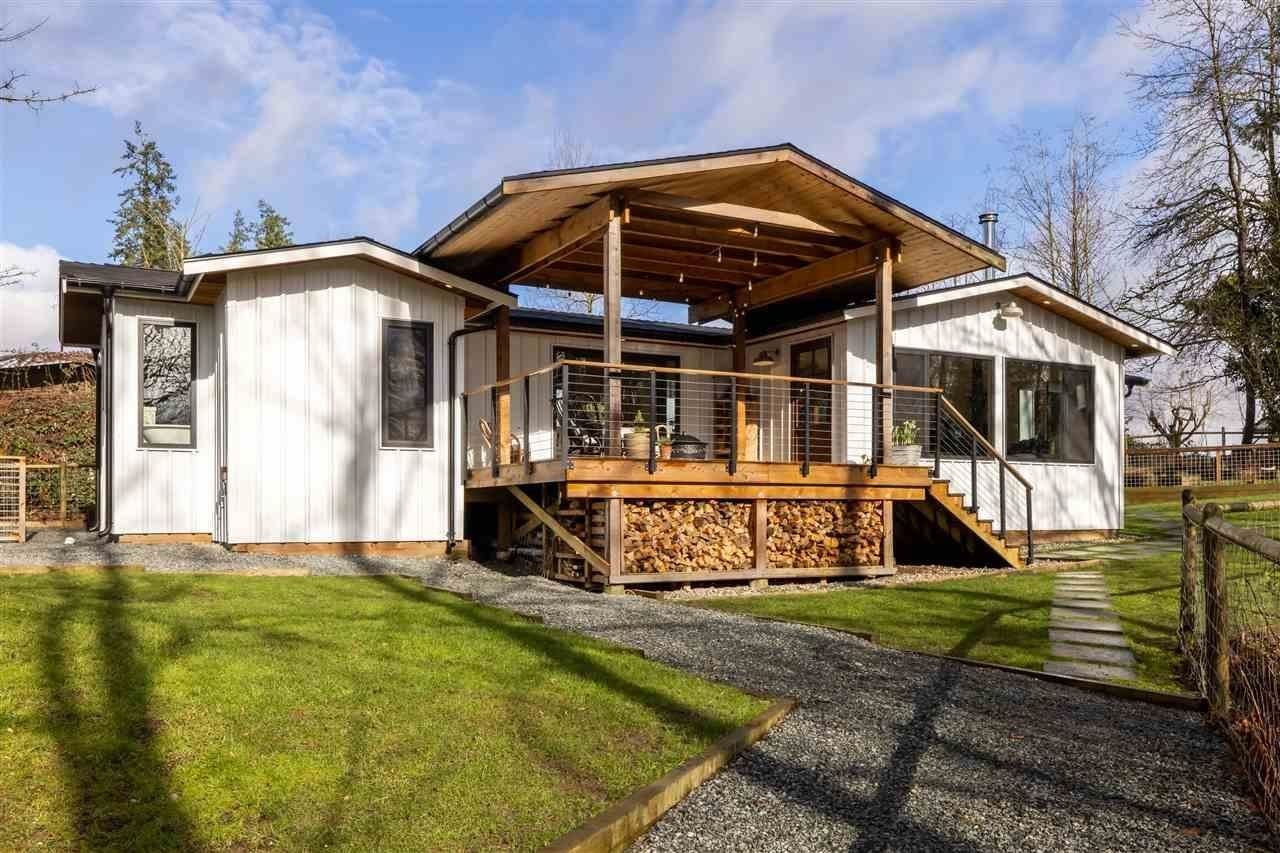
Renovated rural home with a covered wood deck and stacked firewood on a Langley hobby farm

Hobby farm in Langley BC: farm uses vs. non-farm uses

Farming, raising livestock (including horses) and many farm-related activities are permitted farm uses in the ALR, per the ALC. Some non-farm uses, such as a home-based business, are permitted with conditions (local governments can prohibit some of them); others need an ALC application.

The Township says non-farm uses must also comply with its Zoning Bylaw, and ALR applications need a separate Township application. The ALC warns that a staffing shortage may delay applications. Planning a business or short-term rental? Get answers before you buy.

Langley Township's Rural Plan and zoning

The Township's Rural Plan (Bylaw No. 3250, adopted July 12, 1993 and amended since) has a primary goal of enhancing agricultural viability, while also retaining countryside character. Most of the rural area is designated Agriculture/Countryside, with a minimum lot size of 8 ha (19.8 acres), subject to ALC approval.

The Township's Zoning Bylaw No. 2500 sets permitted uses, lot coverage and building restrictions, which vary by property. The Township's GeoSource mapping tool shows a property's zoning and, under the Planning layer, its rural land use designation.

A Rural Plan update isn't formally underway. The Township's Agricultural Advisory Committee recommended one on September 24, 2025, and Council referred the request to staff on November 3, 2025. On April 22, 2026, staff told the committee they were working on terms of reference. As of October 1, 2026, there's no published timeline or public engagement page.

Well water rules in BC: what acreage buyers should know

Under BC's Water Sustainability Act, groundwater used only for domestic purposes doesn't need a licence. "Domestic" covers household use such as drinking, cooking and cleaning, water for pets or household animals, and a garden up to 1,000 m².

Beyond that, the rules tighten:

  • Non-domestic use needs a licence. Irrigation, commercial or industrial use requires a water licence, with a one-time application fee of at least $250 plus annual rentals.

  • Registration. Domestic well owners are strongly encouraged to register their well. Wells drilled, altered or decommissioned after February 29, 2016 must be in the province's GWELLS database.

Watering crops or non-household livestock? Ask FrontCounter BC whether you need a licence. Township rules also apply:

  • Connecting to municipal water. The Township's Waterworks Regulation Bylaw No. 6074 (s. 3.1) requires a private well to be decommissioned within 30 days of connecting to municipal water, unless the owner applies to keep it for agricultural use.

  • Creating new rural lots. The Subdivision and Development Servicing Bylaw No. 5382 requires each new rural lot to have a proven potable groundwater source of at least 2,500 litres per day, with limited exceptions.

  • Testing your water. Members of the Township's free Private Well Network get 20% off bacteria and general chemistry testing at a partner lab.

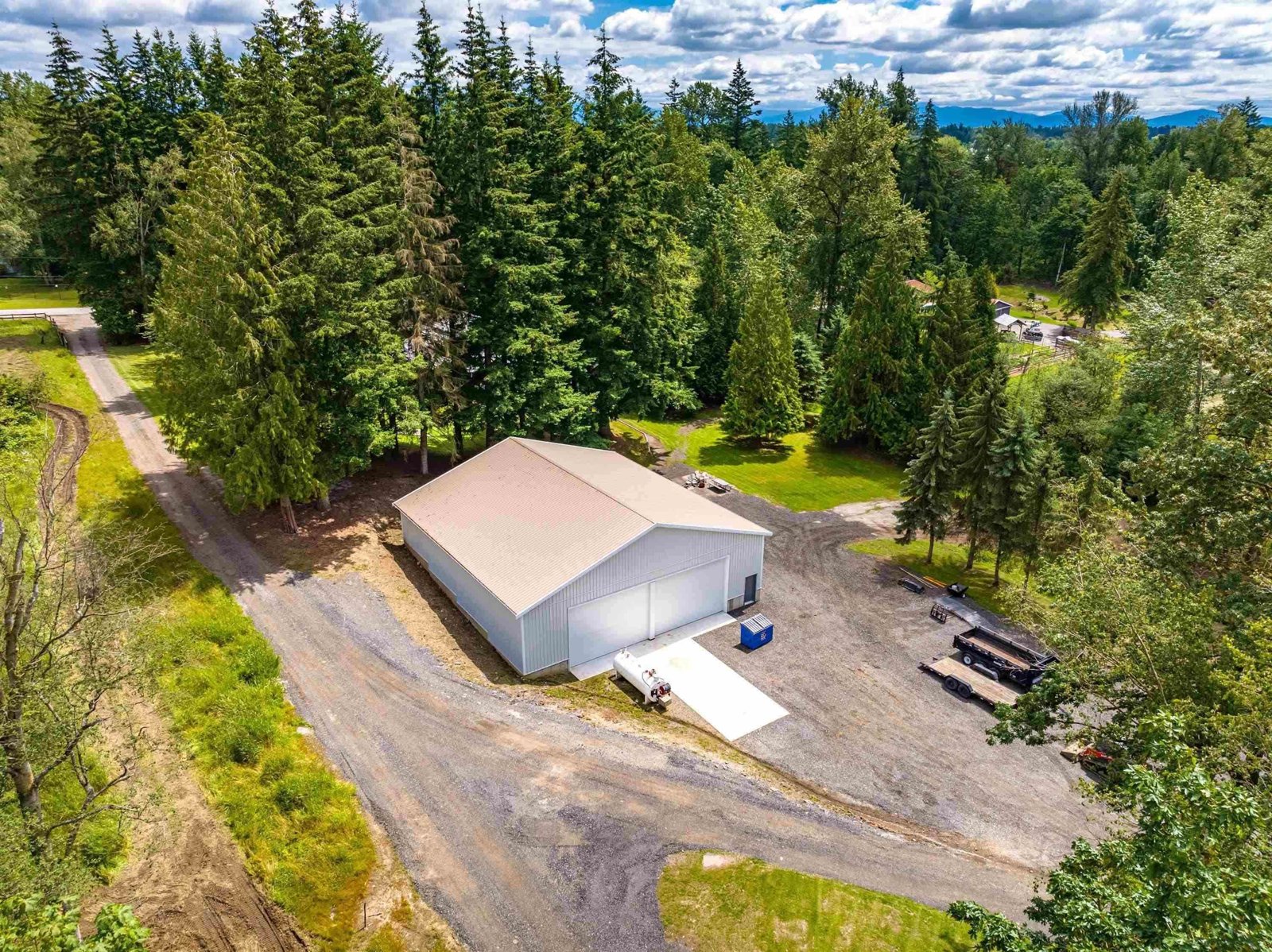
Aerial view of a treed five-acre South Langley property with a large detached shop and long driveway

What Township candidates heard ahead of the October 17 election

On September 22, the Langley Farmers Institute hosted an all-candidates event at Coghlan Hall, reported by the Langley Advance Times. A majority of council candidates and both mayoral candidates took part, rotating through small-group stations on:

  • Enforcement of bylaws in agricultural areas

  • Truck parking in relation to the Rural Plan

  • Water use and zoning

  • The Board of Variance and agricultural issues

The Farmers Institute's Amanda Smith said the message to candidates was, "These issues are coming to you."

For context from Township records: the Zoning Bylaw lets most rural properties park up to three commercial vehicles as an accessory to residential use, and the Township has used tickets and court injunctions against unauthorized trucking. In June 2026, Council approved terms of reference for an Agricultural Bylaw Review Task Force, which runs until November 30, 2026. In February 2026, a provincial groundwater specialist told Council that 21 mapped aquifers overlap the Township, where common issues include declining water levels and contamination. The Board of Variance can consider minor zoning relaxations, such as setbacks, for undue hardship, but it isn't an appeal route for land use or density.

General voting day is Saturday, October 17, 2026, from 8 a.m. to 8 p.m., with advance voting October 6 to 10, per the Township's 2026 Elections page. Mail-in voting isn't available. The October 24 provincial election is a separate vote.

Explore Langley acreages and farms

Browse Langley acreages for sale, Langley farms and agricultural land and Langley horse properties, or rural areas like Campbell Valley, Salmon River and County Line/Glen Valley. My Langley farmland and ALR guide goes deeper.

FAQ

Is my Langley property in the ALR? Check the ALC's ALR map, not just the title notation.

Can I build a second home on ALR land? Possibly one small detached additional residence, if the property has only one home when construction begins and the main home is within the ALC's size limit. The Township can be stricter, so check with the Township and the ALC.

Can I run an Airbnb on an ALR acreage? A bed-and-breakfast of up to four bedrooms in the home you live in is allowed (stays of 30 days or less). Whole-house short-term rentals need ALC approval, and Township rules also apply.

Do I need a licence for my well? Not for household use; irrigation and other non-domestic use need a provincial licence. If you connect to Township water, the well must be decommissioned within 30 days unless you apply to keep it for agricultural use.

Can I subdivide my acreage? Not just because zoning lists a minimum lot size. ALR subdivision is tightly controlled, and each new rural lot needs a proven well water supply. Check with the Township and the ALC.

Thinking about buying or selling an acreage?

Buying a hobby farm or selling a rural property? Get a free home evaluation, or call or text me at 604-928-1361.

Disclaimer: This post is general information only and is not legal, tax, land-use or environmental advice. Rules change and every property is different. Confirm details with the Township of Langley, the Agricultural Land Commission, FrontCounter BC and qualified professionals before buying.

Sources

  1. Matthew Claxton, "Langley Farmers Institute gathers Township council candidates," Langley Advance Times, September 26, 2026: https://langleyadvancetimes.com/2026/09/26/langley-farmers-institute-gathers-township-council-candidates/

  2. Agricultural Land Commission, "Buying and Owning ALR Land": https://www.alc.gov.bc.ca/use-of-alr-land/buying-and-owning-land-in-the-alr/

  3. Agricultural Land Commission, "Housing in the ALR": https://www.alc.gov.bc.ca/use-of-alr-land/housing-in-the-alr/

  4. Agricultural Land Commission, "Permitted Uses": https://www.alc.gov.bc.ca/use-of-alr-land/permitted-uses/

  5. Agricultural Land Commission, "Application Process": https://www.alc.gov.bc.ca/application-and-notice-process/applications/

  6. Agricultural Land Commission, "ALR Maps": https://www.alc.gov.bc.ca/alr-maps/

  7. Township of Langley, "Agricultural Land Use": https://www.tol.ca/en/building-development/agricultural-land-use.aspx

  8. Township of Langley, Rural Plan (Bylaw No. 3250, consolidated): https://www.tol.ca/en/services/resources/bylaw-services/bylaws/Community-Plan-Bylaws/Rural-Community-Plan-Bylaw-%28No.-3250%29.pdf

  9. Township of Langley, "Zoning Bylaw": https://www.tol.ca/en/building-development/zoning-bylaw.aspx

  10. Province of BC, "Requirements for groundwater users": https://www2.gov.bc.ca/gov/content/environment/air-land-water/water/water-licensing-rights/water-licences-approvals/new-requirements-for-groundwater-users

  11. Province of BC, "Domestic well registration": https://www2.gov.bc.ca/gov/content/environment/air-land-water/water/groundwater-wells-aquifers/information-for-well-owners/well-records-registration/domestic-well-registration

  12. Township of Langley, Agricultural Advisory Committee minutes, September 24, 2025: https://calendar.tol.ca/meetings/Detail/2025-09-24-1900-Agricultural-Advisory-Committee/d9a382c3-4c5b-4ba7-8a44-b37d010c91a4

  13. Township of Langley, Regular Council Meeting minutes, November 3, 2025: https://calendar.tol.ca/meetings/Detail/2025-11-03-1330-Council-Meetings/54dd79d8-be10-4704-9183-b3ae015d56fb

  14. Township of Langley, Agricultural Advisory Committee minutes, April 22, 2026: https://calendar.tol.ca/meetings/Detail/2026-04-22-1900-Agricultural-Advisory-Committee/8ace14ee-0406-48d1-b96d-b45600fb080e

  15. Township of Langley, GeoSource mapping tool: https://geosource.tol.ca/

  16. Township of Langley, Waterworks Regulation Bylaw No. 6074 (consolidated): https://www.tol.ca/en/services/resources/bylaw-services/bylaws/Other-Bylaws/Langley-Waterworks-Regulation-Bylaw-%28No.-6074%29.pdf

  17. Township of Langley, Subdivision and Development Servicing Bylaw 2019 No. 5382 (consolidated): https://www.tol.ca/en/services/resources/bylaw-services/bylaws/Development-Bylaws/Subdivision-and-Development-Servicing-Bylaw-2019-%28No.-5382%29.pdf

  18. Township of Langley, "Private Well Network": https://www.tol.ca/en/services/private-well-network.aspx

  19. Township of Langley, Report 24-24 on bylaw enforcement and commercial truck parking, Council agenda, February 12, 2024: https://calendar.tol.ca/meetings/Detail/2024-02-12-1330-Council-Meetings/e01ecb6b-c41c-4ec2-97b4-b111010a262a

  20. Township of Langley, Regular Council Meeting minutes, June 15, 2026: https://calendar.tol.ca/meetings/Detail/2026-06-15-1330-Council-Meetings/6ef701b6-6acd-4f7e-8068-b47901002596

  21. Township of Langley, Council agenda, June 15, 2026 (Agricultural Bylaw Review Task Force terms of reference): https://calendar.tol.ca/meetings/Detail/2026-06-15-1330-Council-Meetings/65266120-a878-4210-9d07-b4670167140f

  22. Township of Langley, Regular Council Meeting minutes, February 23, 2026: https://calendar.tol.ca/meetings/Detail/2026-02-23-1330-Council-Meetings/9f09d6dd-926f-4f38-9416-b40901084fbc

  23. Township of Langley, "Board of Variance": https://www.tol.ca/en/building-development/board-of-variance.aspx

  24. Township of Langley, "2026 Elections": https://www.tol.ca/en/the-township/2026-elections.aspx

  25. Township of Langley, "Voting Dates and Locations": https://www.tol.ca/en/the-township/2026-voting-dates-and-locations.aspx

Read

Important: this is an election proposal, not law. The Unsold Condo Tax and the higher Speculation and Vacancy Tax rates described below are campaign proposals made ahead of the provincial election on Saturday, October 24, 2026. Nothing has been passed, and no start date has been announced.

If you own, are buying, or hold a presale condo in Surrey or Langley, here is a plain-language summary of what's been proposed, what it could mean for you, and what's still unanswered.

What is the proposed unsold condo tax in BC?

On September 25, a new "Unsold Condo Tax" was proposed as part of the provincial election campaign. As reported by Daily Hive, it would apply to finished condos left empty and unsold for more than a year. According to the proposal, the tax would work like this:

  • Year 1: no tax

  • Year 2: 2%

  • Year 3: 3%, increasing by one percentage point for each additional year a condo remains unsold

Daily Hive describes it as a tax aimed at developers who leave newly completed strata condos unsold. The stated goal is to encourage developers to sell finished homes at lower prices, and the proposal estimates the plan could bring up to 5,000 empty condos across BC into use. Citing a September 2026 Real Property Data report, the proposal says these unsold units are worth an estimated $4.45 billion, with more than 1,300 finished over two years ago and some dating back to 2019. These are province-wide figures, not Surrey or Langley numbers.

BC Speculation and Vacancy Tax increase 2026: the proposed rates

The same announcement included a one-percentage-point increase to the Speculation and Vacancy Tax (SVT):

  • Domestic: from 1% to 2%

  • Foreign: from 4% to 5%

According to the proposal, the change is meant to move more empty units into the long-term rental market, and any additional revenue would go to building affordable homes. Daily Hive notes that the 2026 provincial budget had already raised the foreign-owner rate from 3% to 4% for the 2027 tax year, so the proposed 5% would go further than that scheduled increase.

What we don't know yet

According to Daily Hive's reporting, the announcement did not provide:

  • An implementation date

  • How the taxable value of an unsold condo would be determined

  • Any exemptions

  • A maximum rate for the new condo tax

It also didn't explain whether the provincial-federal condo conversion partnership announced in June 2026 would continue alongside the proposed tax.

Where the proposal stands

Not all parties support the proposal, and it has drawn criticism during the campaign, as reported by Daily Hive. Whether it moves forward depends on the October 24 election result and on any legislation that follows. If you're weighing a purchase or sale, it makes sense to plan around the rules in place today.

A related change: PST on real estate services is paused

The 2026 budget planned to expand the 7% PST to more professional services, including real estate services, starting October 1. On September 18, the provincial government announced a "pause" to that expansion. Because it was paused rather than cancelled, it could still be brought in later. For now, the expansion has not taken effect.

What it could mean for condo buyers in Surrey and Langley

If the proposal became law, its stated intent is to push developers with finished, unsold units to lower prices. Whether that happens would depend on details that haven't been released. For buyers:

  • Don't wait on a promise. Nothing changes unless the proposal is passed into law after the October 24 election, and there's no timeline.

  • Ask about completed inventory. If a building has been finished for a while, it's reasonable to ask about pricing and incentives, whatever happens with the tax.

  • Compare resale and new. Browse current Surrey condos under $800K, South Surrey condos for sale and Langley condos under $499K to see how completed new units compare with resale.

What it could mean for condo sellers and presale owners

Daily Hive describes the proposed tax as aimed at developers, and none of the sources say whether it would apply to individual presale buyers or assignment sales. Until details are released, presale owners shouldn't assume either way.

Daily Hive also points out that the effect on future supply is unclear. Developers are already dealing with unsold inventory, weak sales and high borrowing and construction costs. Faster sales could free up money for new projects, but an escalating tax could also make developers and lenders more cautious about starting new ones.

If you're selling a resale condo, or you own a presale in one of the new construction projects in Langley or South Surrey, it's worth knowing what completed new units nearby are priced at, since you may be competing with them for the same buyers. My selling guide covers how I approach pricing and marketing.

Note: an election proposal, not law

To repeat: the Unsold Condo Tax and the higher SVT rates are campaign proposals. They are not law, their details could change, and no start date has been announced. The outcome depends on the October 24, 2026 election and on any legislation that follows. I'll share an update if details are released.

Thinking about your condo's value?

Whether you're buying, selling or holding a presale, start with real numbers. Get a free home evaluation, or call or text me at 604-928-1361 to talk through your options.

Disclaimer: This post is general information only and is not tax, legal or financial advice. Tax proposals can change. Please speak with a qualified accountant or lawyer about your situation.

Sources

  1. Kenneth Chan, Daily Hive, September 25, 2026: report on the proposed Unsold Condo Tax and higher vacancy tax

  2. Kenneth Chan, Daily Hive, September 28, 2026: report on a campaign pledge of no new taxes or tax increases

Read
Reciprocity Logo The data relating to real estate on this website comes in part from the MLS® Reciprocity program of either the Greater Vancouver REALTORS® (GVR), the Fraser Valley Real Estate Board (FVREB) or the Chilliwack and District Real Estate Board (CADREB). Real estate listings held by participating real estate firms are marked with the MLS® logo and detailed information about the listing includes the name of the listing agent. This representation is based in whole or part on data generated by either the GVR, the FVREB or the CADREB which assumes no responsibility for its accuracy. The materials contained on this page may not be reproduced without the express written consent of either the GVR, the FVREB or the CADREB.